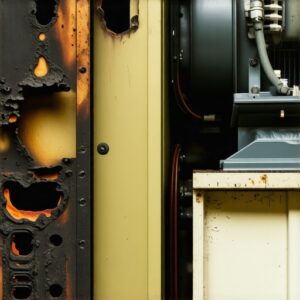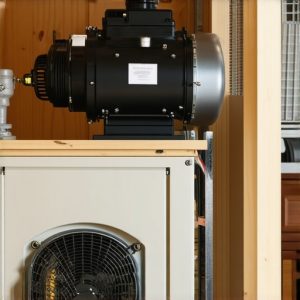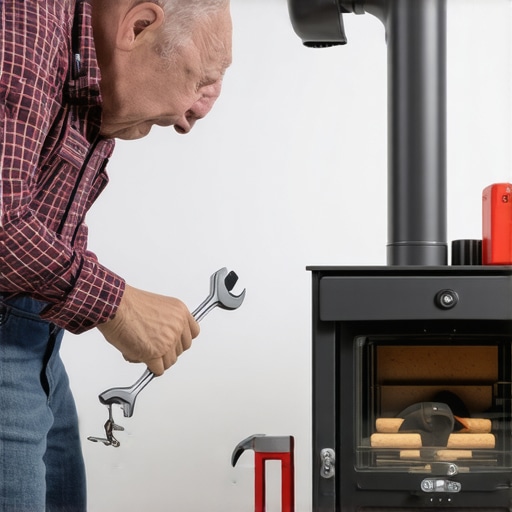
That silence at three in the morning during a sub-zero cold snap is a physical weight. You wake up, and your breath is a pale plume of steam in your own hallway. Your first instinct is to head down to the basement or utility closet, grab your flashlight, and start poking around the furnace. You think, ‘How hard can it be? It’s just some wires and gas.’ But as an old-timer who has spent thirty winters pulling carbon-blacked heat exchangers out of crawlspaces, let me tell you: that mindset is a fast track to either a red-tagged gas meter, a ruined control board, or a ride in an ambulance. Heating physics does not care about your weekend warrior pride.
The Physics Lesson: Why Airflow Rules the Fire
My old mentor, a hard-nosed master mechanic who could smell a cracked heat exchanger from two rooms away, used to scream at me on every single diagnostic call: ‘You can’t heat what you can’t touch!’ He would grab my arm and point to a choked blower wheel covered in oily dust. He was drilling home the fundamental law of thermodynamics: if your furnace cannot establish proper mass flow rate of air across that heat exchanger, the heat cannot be transferred. Instead, that metal chamber rapidly expands, overheats, and eventually cracks. The system turns from a home heater into a carbon monoxide delivery mechanism.
“Uncontrolled combustion or restricted airflow within residential heating appliances represents the single greatest risk to equipment longevity and occupant safety.” – National Fuel Gas Code (NFPA 54)
We are dealing with a cold-climate reality here. In northern zones where the temperature drops below zero for weeks on end, your furnace isn’t just an appliance; it’s a life-support machine. If you attempt a DIY repair without understanding static pressure, gas manifold pressure, or flame rectification, you are playing Russian roulette with your heat. Understanding how to identify when furnace repair is urgent and why is the first step in avoiding catastrophic system failure.
Blueprint: The Forensic Diagnosis of a Heating System
Let’s dissect the mechanical anatomy of your heating system. It is not a black box; it is an organized, sequential assembly of safety devices and thermodynamic components. To understand when to step back and call in a seasoned technician, you need to understand how these parts interact, and why a simple failure in one can cascade into an expensive disaster.
1. The Limit Switch: Your Ultimate Safety Barrier
The limit switch is the mechanical gatekeeper of your furnace. When your blower motor fails, or your filter is so clogged with pet hair that it looks like a wool blanket, the temperature inside the furnace jacket skyrockets. The limit switch senses this extreme heat and breaks the 24V control circuit to shut down the gas valve before your heat exchanger melts. If your furnace is short-cycling—turning on for two minutes, blowing hot air, and then shutting down—you might be tempted to perform a quick limit switch replacement yourself.
But here is what the internet forums won’t tell you: a tripped limit switch is almost never a bad switch. It is a symptom, not the disease. It is screaming that your system is suffocating due to low airflow. If you bypass it or swap it with a generic part that has the wrong temperature rating, you risk cracking your heat exchanger—a repair that instantly turns into a red-tag situation requiring a full system replacement.
2. The Thermostat Brain: Wiring Upgrades and Smart Setups
Often, homeowners think their furnace is dead when the issue is actually the communications hub. You buy a shiny new smart thermostat, pop off the old faceplate, and find a chaotic nest of colored wires. A DIY smart thermostat setup or thermostat wiring upgrades seems simple enough: match red to R, white to W, and green to G. But what happens when your old system doesn’t have a C-wire (the common wire that provides continuous 24V power)?
If you back-feed 24V through the wrong terminal, you can instantly fry the low-voltage transformer on your furnace control board. Suddenly, you hear a sharp ‘pop’, smell that unmistakable, metallic scent of burnt copper windings, and your entire system goes dark. Professional diagnostic skills are required to trace control wiring, especially when integrating complex additions like whole-home humidifiers, steam humidifiers, or advanced air purification integration into your return air drop.
“All electrical field wiring shall conform to the National Electrical Code (NEC) and local ordinances. Miswiring of low-voltage control circuits can lead to premature component failure and hazardous operating conditions.” – ACCA Manual D & Standard 5
3. Complex Hydronic and Large-Scale Heating Systems
If your home relies on hot water or steam rather than forced air, a DIY attempt becomes even more perilous. Performing a baseboard heater repair involves dealing with pressurized, corrosion-inhibited water loops. One wrong turn of a wrench can flood your hardwood floors with black, foul-smelling boiler water.
On a larger scale, such as church heating systems or warehouse heating solutions, the stakes are exponentially higher. These commercial-grade systems utilize massive inputs of BTU/h and complex safety loops, including low-water cutoffs, pressure relief valves, and heavy-duty gas regulators. These are not projects for an amateur with an adjustable wrench; they require specialized commercial combustion analysis and deep code knowledge to prevent catastrophic structural damage.
The Math: When to Fix vs. When to Replace
Every homeowner faces this calculation eventually: do you pour another $400 into an aging mid-efficiency furnace, or do you bite the bullet and invest in a new high-efficiency system? To make an informed decision, you should read about choosing the right HVAC fixes what homeowners need to know.
As a general rule of thumb, if your furnace is over 15 years old and the repair cost exceeds 50% of the cost of a new installation, replacement is the logical choice. Modern systems offer predictive maintenance alerts, variable-speed blowers, and modulating gas valves that slash your utility bills while maintaining a consistent temperature. If you decide it’s time to upgrade, make sure you understand the nuances by exploring AC installation secrets that HVAC pros won’t tell you to ensure you get a system sized perfectly for your home’s thermal envelope.
The Preventive Maintenance Guardrail
You can avoid midnight emergency calls and the temptation to DIY by keeping up with your seasonal maintenance. I am not talking about those cheap “scam tune-ups” where a technician walks in with a rag, wipes down your furnace cabinet, and tries to sell you a whole new system. A real, high-quality maintenance visit involves pulling the flame sensor to clean the silica buildup, checking the microamps, measuring static pressure across the cooling coil, and testing for gas leaks using a calibrated electronic sniffer. To understand how proper maintenance keeps your wallet happy, review these preventative HVAC repair tips for year-round efficiency.
Furthermore, staying informed about common myths can save you from making costly errors. Before you trust online troubleshooting videos, read up on furnace repair myths debunked by industry experts. If you want your system to run efficiently year-round, you can also explore the comprehensive blueprint for cooler summers and warmer winters to keep your mechanical equipment operating at peak performance.