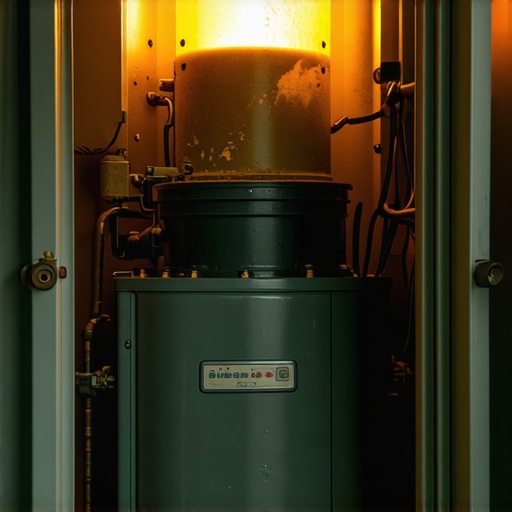
You wake up at 3 AM to a house that feels like a tomb. It is 15 degrees in Chicago, and while you can hear the faint click-click-click of the thermostat calling for heat, the familiar hum of the air handler is missing. Instead, there is a smell—the sharp, acrid scent of hot dust and struggling metal. You go to the basement, and the furnace cabinet feels like a cast-iron skillet left on the burner too long. This is the sound of a system being murdered by its own heat. As a guy who has spent 30 years crawling through spider-infested crawlspaces and melting in 130-degree attics, I can tell you right now: your furnace isn’t ‘broken’ because it’s old; it’s likely suffocating because the blower motor failed. My old mentor used to scream at me until he was purple in the face, ‘You can’t heat what you can’t touch!’ He was talking about the air. If that blower motor isn’t moving air across the heat exchanger, you don’t have a heater; you have a very expensive, very dangerous space heater that is about to melt itself into a puddle of scrap metal. This is the physics of HVAC, and it doesn’t care about your comfort.
“The most expensive equipment in the world cannot overcome a bad duct system or insufficient airflow velocity.” – Industry Axiom
To understand why your furnace is tripping its limit switch, we need to do a forensic diagnosis of the air handler. Think of the blower motor as the lungs of your home. Its job is to pull cold return air through the furnace filter replacement you probably forgot to do last October and shove it through the heat exchanger. In a dual fuel heat pump system or a standard gas furnace, the heat exchanger is a series of metal tubes where the combustion happens. If that motor stops, the heat has nowhere to go. It builds up inside the cabinet until the internal temperature exceeds the safety limit set by the manufacturer. This is when the ‘limit switch’—a small, thermal disc—snaps open and cuts the power to the gas valve. It is a safety feature designed to keep your house from catching fire, but every time it trips, the metal in your heat exchanger expands and contracts violently. Do that enough times, and you’ll be calling me for a cracked heat exchanger, which is a one-way ticket to the scrapyard for your furnace.
The Anatomy of Blower Failure: Why It Happens
Most ‘Sales Techs’ will walk in, see a dead motor, and immediately start pitching you on SEER2 compliant upgrades or a $15,000 full system replacement. They want their commission. But a real tech looks for the ‘why.’ Did the run capacitor dry out and die? Is the motor ‘hunting’ because the bearings are shot? I’ve seen motors so caked in ‘Pookie’ (mastic) and dust that they can’t dissipate their own heat. If your air handler repair involves a motor that smells like a burnt marshmallow, the windings have shorted out. This usually happens because of high static pressure. When you don’t change your filters, or when some tin knocker undersized your return air ducts, the motor has to work twice as hard to pull air. It’s like trying to run a marathon while breathing through a cocktail straw. Eventually, the motor overheats and the thermal overload protector inside the motor housing trips. If you’re lucky, it resets. If you’re not, the motor is toast.
“Standard 62.1 ensures that ventilation rates are met, but without proper blower velocity, heat transfer is fundamentally compromised, leading to premature component failure.” – ASHRAE Standards
Thermodynamic Zooming: The Heat Transfer Problem
Let’s talk about the physics of the heat exchanger. When the burners ignite, they reach temperatures that would make a warehouse heating solution look like a campfire. The metal gets red hot. We need constant airflow to strip that ‘sensible heat’ away from the metal and into your living room. When the blower fails, the temperature inside the plenum can spike from 120°F to 200°F in less than sixty seconds. This isn’t just about comfort; it’s about structural integrity. In modern high-efficiency units, the tolerances are tighter than a sparky’s wallet. We are also seeing a massive shift in the industry with the R-454B refrigerant transition services. While that’s more of an AC issue, it highlights that everything in your 2025-era system is more sensitive to airflow than the old cast-iron beasts of the 1970s. Proper heating service now requires checking the static pressure and the ‘temperature rise’ to ensure that motor is moving enough CFM (Cubic Feet per Minute) to keep the heat exchanger from fatiguing.
The 2025 Reality: Repair vs. Replace
If you’re staring at a $600 air handler repair bill, you might be tempted to just go for an AC installation or a full furnace swap, especially with the new tax credits for high-efficiency gear. But if the heat exchanger is still solid, a new ECM (Electronically Commutated Motor) can give an old furnace a second life. These motors are smarter and more efficient, though they hate power surges. This is why I always recommend leak detector integration and surge protection for the whole cabinet. If you’re in a cold climate like Chicago or the Northeast, you cannot afford a ‘wait and see’ approach. An annual heating inspection is the only way to catch a dragging motor before it kills the furnace on the coldest night of the year. For more on how to stay ahead of these issues, check out how to identify when furnace repair is urgent and why. Remember, a furnace that keeps shutting off isn’t ‘moody’—it’s screaming for help because it’s literally choking to death. Don’t be the person who ignores the signs and ends up with frozen pipes and a $20,000 bill because you didn’t want to deal with a ‘noisy’ blower motor.
The Importance of Professional Airflow Analysis
When I go out for a heating service call, I’m not just looking at the flame color. I’m looking at the blower wheel. If those blades are coated in even 1/16th of an inch of dust, the aerodynamic lift is gone. It won’t move the air, and you’re back to square one with an overheating unit. This is why furnace filter replacement isn’t just a ‘suggestion’ from the manufacturer; it’s a mechanical requirement. If you want to dive deeper into how to keep your system running without getting scammed, read these furnace repair myths debunked by industry experts. We’re moving into an era of SEER2 compliant upgrades where every watt and every CFM counts. Don’t let a bad motor or a lazy maintenance schedule ruin your winter. Get the airflow right, and the heat will follow. Physics doesn’t lie, and neither does the smell of a burning motor.