The Sound of Silence: A Forensic Diagnosis of Commercial Failure
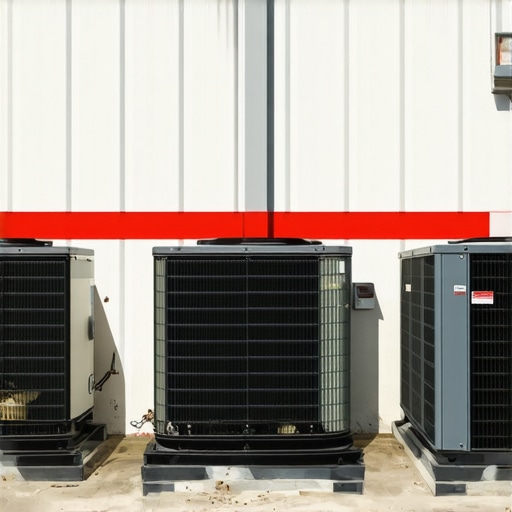
There is a specific kind of silence that makes a facility manager’s blood run cold. It is not the peaceful silence of a productive office; it is the heavy, stagnant hush of a 20-ton rooftop unit (RTU) that has finally surrendered to the heat. I have spent 30 years climbing rusted ladders and smelling the acrid, sour stench of a burnt-out compressor—a smell that stays in your nostrils for days and tells you exactly how much money is about to leave the client’s bank account. When a commercial system stops, the clock doesn’t just tick; it bleeds cash. If you think the repair bill is high today, wait until you see the cost of the ’emergency’ swap because you ignored a $200 contactor. In the Southwest, where the 115°F ambient heat cooks capacitors like eggs on a sidewalk, procrastination is not just a habit; it is a liability.
The Narrative: Exposing the Sales Tech Scam
I remember following a ‘Sales Tech’—you know the type, clean uniform, shiny van, knows more about financing than he does about thermodynamics—into a manufacturing plant last August. He’d quoted the owner $48,000 to replace three air handlers, claiming the coils were ‘beyond salvage.’ The owner was vibrating with stress. I walked up to the first unit, pulled the service panel, and found a blown capacitor and a contactor so pitted it looked like it had been through a war. Total parts cost? Less than a steak dinner. This ‘tech’ didn’t even check the static pressure testing results or perform a combustion analysis on the heating side. He just saw an old unit and a chance to hit a commission. This is why you need a tech who actually knows how to use a multimeter, not just a iPad. I fixed the ‘dead’ units for the price of a service call, but I warned him: that neglect had already shaved two years off the compressor’s life. We got him on preventative maintenance contracts immediately to stop the bleeding. Top hvac repair strategies to extend your systems life are not suggestions; they are the laws of the trade.
“The most expensive equipment in the world cannot overcome a bad duct system.” – Industry Axiom
The Mechanical Anatomy: Why Heat is the Ultimate Enemy
To understand why waiting for air handler repair is a mistake, you have to understand the physics of the machine. In a dry, high-heat environment, we deal with massive ‘sensible heat’—the temperature we actually feel. Your commercial RTU is a heat pump in reverse during the summer, trying to reject heat from the building into an atmosphere that is already boiling. When your coils are caked in desert dust, the ‘head pressure’ inside the suction line sky-rockets. The compressor, the heart of the system, has to work twice as hard to move the juice (refrigerant). Eventually, the internal windings fail, the oil turns to acid, and you’re looking at a ‘burnout.’ Once that acid hits the system, even a new compressor is at risk of premature death. This is why warranty service plans are your only shield against the inevitable. We don’t just ‘top off the gas’; if it’s low, there’s a leak, and a leak means the system is no longer a sealed environment. Oxygen and moisture are the cancer of the HVAC world.
The Thermodynamic Deep Dive: Airflow and Pressure
Airflow is king. If you don’t have enough ‘return air,’ the evaporator coil doesn’t have enough heat to boil the refrigerant. The liquid refrigerant then slugs back to the compressor, which is designed to pump vapor, not liquid. Imagine trying to compress a brick—that’s what happens to your compressor valves. This is why static pressure testing is the first thing I do. If the tin knocker who installed the ducts didn’t size them right, your high-efficiency unit is running like a 10-SEER clunker from 1994. In commercial settings, we also have to account for specialized systems. Whether it is pool heater repair for a hotel or infared heater installation for a high-ceiling warehouse, the principles remain: if the combustion isn’t right, you’re producing Carbon Monoxide and wasting fuel. A proper combustion analysis ensures that the fuel-to-air ratio is optimized, preventing cracked heat exchangers that can shut a business down instantly by order of the fire marshal. How to identify when furnace repair is urgent and why is critical knowledge for any shop foreman.
“Ventilation systems shall be designed and installed to provide the required outdoor air rates while the system is operating.” – ASHRAE Standard 62.1
The Math: Repair vs. Replacement and the 2025 Cliff
Let’s talk numbers. A preventative maintenance contract might cost you a few hundred dollars a quarter. An emergency air handler repair on a Sunday afternoon will cost you triple that just in labor. But the real ‘trap’ is the upcoming regulatory shift. By 2025, the industry is moving away from R-410A to A2L refrigerants. These new units will require specialized sensors and potentially entirely different duct configurations to handle the ‘mildly flammable’ nature of the new gas. If you have an old R-22 or R-410A system that is on its last legs, waiting until it dies in July of next year is a gamble you will lose. Rebate application assistance is available now for high-efficiency upgrades, including attic insulation for heating improvements that reduce the load on your HVAC. Don’t wait until the supply chain for the old refrigerant dries up and the price per pound hits the moon. Efficient hvac repairs are about foresight, not just reaction.
The Airflow Manifesto: More Than Just Cooling
If you have ‘hot spots’ in your building, it’s rarely the thermostat’s fault. It is a physics problem. We often find that fireplace insert services or auxiliary heating units are being used to compensate for a poorly balanced air system. Using Pookie (mastic) to seal duct leaks can often increase delivered CFM (Cubic Feet per Minute) by 20% without touching the motor. We look at the ‘Total External Static Pressure.’ If it’s too high, your blower motor is pulling extra amps, heating up, and destined for the scrap heap. This is especially true for commercial kitchens and gyms where the latent heat (humidity) load is variable. If you don’t maintain the preventative maintenance contracts, the moisture stays in the air, the building smells like a locker room, and your customers leave. If you need a real diagnosis, you need to contact us before the system locks up for good. There is no magic ‘juice’ to fix a mechanical failure caused by five years of ignored filter changes and dusty coils. Comfort is physics, and physics doesn’t take days off.