The sound of a dying compressor is a specific kind of music; it’s a rhythmic, metallic clanking that tells me a business owner is about to lose a lot of sleep and even more money. But right now, the industry isn’t just dealing with mechanical failure. We are staring down the barrel of the 2025 R-410A phase-out, and if you think ‘topping off the gas’ was expensive last summer, you haven’t seen anything yet. I’ve spent three decades dragging my manifold gauges through cramped mechanical rooms and over frozen parapet walls, and I can tell you that the ‘Sales Techs’ are already licking their chops. I followed one of these guys into a local warehouse last month. He’d quoted the owner thirty grand for two new rooftop units because of a ‘refrigerant leak that can’t be fixed due to the phase-out.’ It was a total lie. I crawled up there, found a vibrated-out flare nut on the suction line, tightened it, and performed a proper 500-micron vacuum pull. Total repair? A few hundred bucks. But that business owner was almost bullied into a replacement she didn’t need because she didn’t understand the thermodynamic cliff we are all about to walk over.
The Death of R-410A and the Birth of A2L
For twenty years, R-410A has been the ‘juice’ of choice. But the EPA is tightening the screws. We are transitioning to A2L refrigerants like R-454B and R-32. These aren’t just new labels; they are fundamentally different chemicals with lower Global Warming Potential (GWP). Here is the technical reality that the glossy brochures won’t tell you: A2L refrigerants are classified as ‘mildly flammable.’ That means the new equipment coming into your building isn’t just a box of coils; it’s a sophisticated laboratory equipped with leak sensors and mitigation boards that will shut the whole system down if it detects a whiff of gas in the wrong place. This is why heating service innovations transforming 2025 climate control are becoming mandatory, not optional. If you buy a ‘cheap’ R-410A unit today, you are buying a dinosaur. In five years, the cost of a simple recharge will be more than the unit is worth because the supply of that refrigerant will be throttled by 80%.
“The most expensive equipment in the world cannot overcome a bad duct system, and no refrigerant can compensate for a lack of maintenance.” – Industry Axiom
Thermodynamic Zooming: Why Your BTU Capacity is About to Change
Let’s talk about enthalpy. Most people think an AC ‘blows cold.’ It doesn’t. It removes heat. The evaporator coil must drop below the dew point of the air to remove latent heat—that’s the humidity that makes your office feel like a swamp even when the thermostat says 70 degrees. In our northern climate, we deal with extreme temperature swings that torture the metal. When you transition to these new refrigerants, the pressure-temperature relationships change. You cannot just ‘drop in’ new gas into an old system. The expansion valves (TXV) are calibrated for specific flow rates. If you try to mix them, you’ll slug the compressor with liquid, and you’ll be calling for a 24/7 heating emergency response when the heat pump side fails in January. I’ve seen ‘tin knockers’ try to fudge the numbers on duct sizing for decades, but these new high-pressure systems are less forgiving. If your static pressure is too high, you’ll blow the control board diagnostics on a weekly basis.
The Control Board Logic and Predictive Maintenance
The era of the ‘wait until it breaks’ mentality is dead. Modern commercial systems are now utilizing AI-driven HVAC optimization to monitor the ‘vitals’ of the machine. I’m talking about predictive maintenance alerts that can tell me a bearing is failing in your blower motor before you even hear the screech. If you aren’t on preventative maintenance contracts, you are playing Russian roulette with your overhead. For a business, a control board diagnostics failure in a server room isn’t just an inconvenience; it’s a catastrophic loss of data and revenue. I’ve had to perform wiring repair for heating systems that were fried because a simple contactor welded shut and the owner didn’t have a priority service membership to catch it during a semi-annual check. We look for ‘pookie’—that’s the mastic sealant—that has cracked over time, causing massive air leaks. We check the suction line to ensure it’s ‘beer can cold,’ which tells me the superheat is correct and the compressor is safe from liquid slugging.
“All technicians handling Class I, II, or III refrigerants must be certified under Section 608 of the Clean Air Act to ensure the protection of the atmosphere.” – EPA Section 608 Regulations
The Hidden Dangers: Carbon Monoxide and Cracked Heat Exchangers
In our zone, heating is a life-safety issue. During the transition to new heat pump replacement technologies, many businesses are still clinging to old gas-fired furnaces. This is where the real danger lies. Every time I do a heat pump replacement survey, I find at least one furnace with a hairline crack in the heat exchanger. That’s a one-way ticket for carbon monoxide to enter the building. This is why carbon monoxide detector installation is non-negotiable for commercial properties. You can’t smell it, you can’t see it, and by the time you feel it, it’s too late. I’ve seen ‘Sales Techs’ ignore these cracks because they didn’t want to do the actual work of a combustion analysis. They just want the quick commission. A real tech will show you the crack with a camera and explain why that flame rollout is happening. It’s physics, not a sales pitch.
The Brand Science: Trane, Carrier, and the A2L Future
When you are choosing your next system, don’t just look at the SEER2 rating. Look at the serviceability. Some brands make it impossible to reach the capacitor or the contactor without dismantling half the cabinet. As someone who has spent too many hours on a 120-degree roof, I can tell you that a service-friendly design saves you money on labor. Whether you are looking at Trane, Carrier, or Goodman, the key is the installation. I’ve seen the best equipment in the world fail in three years because a ‘sparky’ didn’t wire the low voltage correctly or the installer didn’t use a nitrogen purge while brazing the lines. Those copper oxides will travel straight to your TXV and clog it, leading to a heat pump replacement far sooner than necessary. The phase-out is coming, and the only way to win is to invest in quality installation and rigid maintenance protocols. Stop listening to the guys in the clean white shirts who never have grease under their fingernails. Listen to the airflow—it never lies.
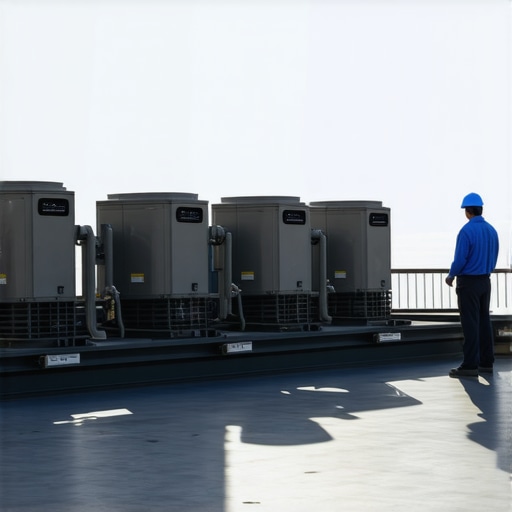
“,”image”:{“imagePrompt”:”A professional HVAC technician in a dark blue uniform, with grease on his hands, using a manifold gauge to check the suction line of a large commercial rooftop unit. The background shows a modern city skyline under a clear sky. Close up on the gauges showing high-pressure readings.”,”imageTitle”:”Professional HVAC Technician Measuring Refrigerant Pressure”,”imageAlt”:”An expert HVAC technician performing a diagnostic check on a commercial rooftop unit to prepare for the refrigerant phase-out.”},”categoryId”:0,”postTime”:””}“`