The Anatomy of Silence: When Your Heating Fails
Listen, when the inducer motor stops its rhythmic hum and your house goes into a deathly quiet in the middle of a January freeze, you aren’t just looking at a broken machine; you’re looking at a total breakdown in thermodynamic equilibrium. I’ve spent thirty years crawling through crawlspaces and melting my boots on rooftops, and I can tell you that the most frustrating call-out is the ‘no heat’ call right after a thunderstorm or a grid flicker. Homeowners always think the ‘gas’ is gone. It isn’t. Usually, the electrical guts of your system took a hit, and the thermocouple is standing there like a sacrificial lamb. But here’s the kicker: the thermocouple itself is a simple piece of copper and dissimilar metals. It’s hard to ‘fry’ it with a surge in the traditional sense, yet they ‘fail’ constantly after a power event. Why? Because a power surge is a violent electrical ghost that hunts for the path of least resistance, often blowing out the transformer replacement you didn’t know you needed or scrambling the logic in your control board.
The Physics Lesson: You Can’t Cool What You Can’t Touch
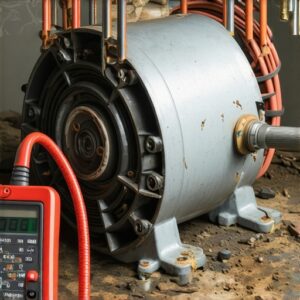
My old mentor used to scream at me until he was blue in the face, ‘You can’t cool what you can’t touch!’ This was his way of pounding the importance of airflow measurement services into my thick skull. He wasn’t just talking about air hitting a coil; he was talking about the physical contact of energy. In a furnace, if you don’t have the right airflow, you get heat soak. When a power surge hits, it often kills the blower motor or the capacitor. Without that motor moving air, the heat inside the furnace cabinet skyrockets instantly. That thermocouple, which is designed to sit in a nice, steady pilot flame, suddenly gets baked by ambient cabinet heat that exceeds its design limits. It’s a cascading failure. The surge didn’t just kill the copper; it killed the system’s ability to regulate its own temperature. This is why I always tell folks that a 24/7 heating emergency response is more about forensics than just swapping parts. You have to find out why the safety circuit tripped.
“The most expensive equipment in the world cannot overcome a bad duct system.” – Industry Axiom
The Millivolt Mystery: How Thermocouples Actually Work
To understand the failure, you have to understand the Seebeck effect. A thermocouple isn’t a switch; it’s a tiny power plant. It uses the temperature difference between two different metals to create a millivolt signal—usually between 25 and 30mV. That’s enough juice to hold a tiny electromagnetic coil open inside your gas valve. When a power surge hits the house, it doesn’t usually travel down the thermocouple lead. Instead, it hits the 24V transformer. When that transformer spikes, it can send a jolt through the gas valve solenoid. If that solenoid gets charred, it won’t matter if your thermocouple is putting out a perfect 30mV; the valve won’t stay open. I’ve seen ‘Sales Techs’—those guys in the clean shirts who wouldn’t know a pipe wrench from a pogo stick—quote a sweet old lady for a $15,000 new system because of this. They see a dead pilot and a burnt transformer and start talking about ‘unreliable older units.’ It’s a scam. Most of the time, a simple transformer replacement and a new lead will have that wall furnace installation humming again for a few hundred bucks.
Climate Context: The Cold Zone Battle
In the North, where the air gets so dry it’ll crack your skin just looking at it, we deal with different physics. This is where humidifier installation becomes a lifesaver for your HVAC components. Dry air is a playground for static electricity, which, combined with a power surge, can wreak havoc on sensitive electronics like a voice control setup Alexa Google or your geofencing temperature control. These modern ‘smart’ features are great until the grid gets twitchy. A surge can travel through the low-voltage wiring of a smart thermostat and blow the thermal fuse in your furnace before the breaker even thinks about tripping. In these cold climates, we also worry about flame rollout. If the surge messed with your inducer motor’s timing, the gas might ignite but not be pulled through the heat exchanger correctly. This creates a dangerous back-draft. If you’re smelling something sour or acidic, that’s not just ‘old furnace’ smell; that’s the smell of components cooking. You need to know how to identify when furnace repair is urgent and why to avoid a carbon monoxide situation.
Airflow: The King of System Longevity
People love to talk about SEER ratings and AFUE percentages, but they ignore the ductwork. I’ve seen warehouse heating solutions that were designed by guys who must have failed geometry. They’ve got 10 tons of air trying to squeeze through a 5-ton trunk. When a power surge hits a system that is already struggling with high static pressure, the components are already at their breaking point. The ‘Sparky’ (electrician) might fix the breaker, but the HVAC tech has to deal with the weakened capacitor that finally gave up the ghost. I always check the ‘Pookie’ (mastic) on the plenum. If the seals are leaking, your airflow is garbage, and your unit is working twice as hard. This heat-stress makes every electrical component—from the UV light installation for HVAC to the main blower—more susceptible to surge damage. You can find some top HVAC repair strategies to extend your systems life, but it all starts with letting the machine breathe.
“Standard 62.1 provides the minimum ventilation rates and other measures intended to provide indoor air quality that is acceptable to human occupants.” – ASHRAE Standards
The Forensic Diagnosis: Repair vs. Replace
So, your unit is dead after a storm. Do you pull the plug? If you’re looking at a new construction heating design, you’re in the clear. But for the rest of us with units from 2015, it’s a math game. A thermocouple is a $20 part. A transformer is $50. A control board might be $300. Even with labor, you’re under a grand. Compare that to the $8,000 to $12,000 for a full replacement. The only time I tell a customer to scrap it is if the heat exchanger is cracked—which can happen during a violent ‘hard start’ after power is restored—or if the compressor has grounded out. Most of the time, the ‘Sales Tech’ is just trying to hit a quota. They’ll tell you that the new 2025 A2L refrigerants mean you have to upgrade now. Don’t believe the hype. While the transition is real, your current system can be maintained if you know the furnace repair myths debunked by industry experts. We’re moving toward mildly flammable refrigerants and sensors for everything, which just means more things for a power surge to break in the future.
Preventive Maintenance: The Anti-Surge Blueprint
If you want to stop the ‘dead thermocouple’ dance, you need three things: a high-quality surge protector at the outdoor disconnect, a transformer with an internal circuit breaker, and regular maintenance. Don’t just get a ‘tune-up’ where a kid sprays a hose at your coils for ten minutes. You want a tech who checks the ‘Suction Line’ (it should be beer can cold in the summer) and measures the millivolt drop across your safeties. If you’re looking for heating service hacks for comfort and savings in 2025, start with a hard start kit. It helps the compressor kick on without drawing a massive spike of ‘juice,’ which protects your internal wiring from heat fatigue. And please, for the love of all that is holy, stop closing your vents to ‘save money.’ It just destroys your static pressure and kills your blower motor. Comfort is physics, not magic. If you treat the air right, the machine will treat you right. For those dealing with complex setups, like warehouse heating solutions or new installs, getting the airflow measurement services right on day one is the difference between a 20-year lifespan and a 5-year headache. If you’re stuck in the dark and the house is getting cold, don’t panic—just call someone who knows the difference between a real failure and a tripped safety.