The Forensic Diagnosis: Why Your Furnace Motor Is Dying A Slow Death
The smell hits you before the silence does. It’s that sharp, metallic ozone scent that lingers in a cold basement when the thermostat is calling for heat but the house remains a tomb. As a technician with thirty years spent crawling through crawlspaces and balancing on joists, I can tell you that the heart of your heating system isn’t the burner—it’s the blower motor. My old mentor used to scream, ‘You can’t cool what you can’t touch!’ This is why airflow matters more than horsepower. If that blower isn’t moving air across the heat exchanger, the whole system becomes a localized bomb of thermal stress. When a motor starts ‘amping out,’ it’s telling a story of friction, resistance, and impending mechanical failure. Most homeowners ignore the warning signs until they’re looking at a three-thousand-dollar emergency bill on a Sunday night in January.
The Mechanical Anatomy of a Blower Under Stress
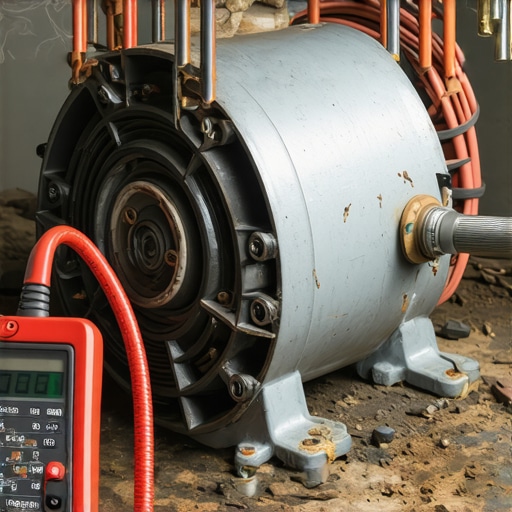
To understand why a motor pulls high amps, you have to understand the physics of an inductive load. The blower motor uses electromagnetic fields to spin a shaft connected to a squirrel-cage fan. In a perfect world, the resistance against that fan is minimal. But we don’t live in a perfect world; we live in one filled with pet dander, drywall dust, and ‘tin knockers’ who sized the return ducts too small. When a motor encounters resistance—whether it’s mechanical friction in the bearings or aerodynamic resistance from a clogged filter—it has to work harder to maintain its RPMs. This ‘work’ translates directly into amperage. As the windings inside the motor heat up, the varnish on the copper wires begins to degrade. Once that insulation fails, the electricity finds a shorter path, and your amp draw skyrockets. If you’ve noticed your lights flickering when the heat kicks on, or a rhythmic ‘thump-thump’ from the closet, your motor is likely on its last legs. You might need urgent furnace repair before the motor seizes and takes the control board with it.
“The most expensive equipment in the world cannot overcome a bad duct system.” – Industry Axiom
The Warning Signs: Listening to the Iron and Copper
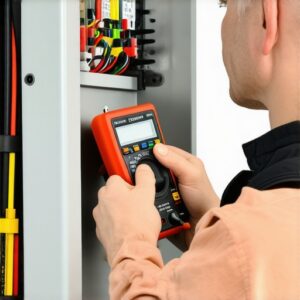
A failing blower motor has a specific sensory profile. First, there’s the heat. A healthy motor should be warm, not ‘burn-your-hand’ hot. If the motor casing is discoloring or the labels are peeling off from thermal expansion, you’re pulling too many amps. Second, listen for the ‘bearing scream.’ When the sealed bearings lose their factory grease, they start to gall. This friction creates a high-pitched whine that resonates through the ductwork. If you’re hearing that, your ‘Sparky’ or HVAC tech needs to put a clamp meter on the common wire immediately. We look for the ‘Full Load Amps’ (FLA) rating on the nameplate. If a motor rated for 5.0 amps is pulling 5.8, it’s not just ‘working hard’; it’s dying. Often, this is caused by high static pressure—the HVAC equivalent of trying to breathe through a cocktail straw while running a marathon. Many furnace repair myths suggest that a louder motor means it’s more powerful, but in reality, noise is just energy being wasted as vibration and heat.
The Math of Friction: Repair vs. Replace
In the North, where the polar vortex turns your furnace into a 24/7 marathon runner, the blower is the most abused component in the home. If you have an older Permanent Split Capacitor (PSC) motor, high amp draw might just be a failing run capacitor. A ten-dollar part can sometimes save a five-hundred-dollar motor. But if you have a modern ECM (Electronically Commutated Motor), the logic is different. These motors are designed for efficient climate control, but they are incredibly sensitive to static pressure. If your ductwork is restricted, an ECM will ramp up its torque to compensate, pulling massive amounts of juice until the sensitive onboard electronics fry. If your technician finds a cracked heat exchanger during the blower inspection, the ‘repair vs. replace’ math changes instantly. You wouldn’t put a new engine in a car with a snapped frame. Similarly, if your chimney liner installation is failing or your steam boiler repair costs are mounting on a secondary system, it might be time to look at a full system overhaul.
“Proper air distribution is essential to equipment reliability and occupant comfort.” – ACCA Manual D
Thermodynamic Zooming: The Airflow Manifesto
Let’s get technical about latent vs. sensible heat. In the winter, we care about sensible heat—the temperature we feel. Your furnace uses the blower to move air over the heat exchanger cells. If the blower is amping out and slowing down, the air stays in contact with the heat exchanger too long. This causes the ‘limit switch’ to trip. The furnace gets too hot, shuts down the burners, cools off, and restarts. This ‘short cycling’ is a silent killer. It stresses the metal of the heat exchanger through repeated expansion and contraction. I’ve seen ‘Sales Techs’ try to sell a whole new furnace because of a tripped limit switch, when the real culprit was just a blower motor pulling 10% more amps than it should because of ‘pookie’ (mastic) blocking a return air drop. Don’t fall for the scam. A real pro will check the furnace flame sensor cleaning and the thermocouple replacement, but they will ALWAYS start with the amp draw on the blower. If the motor is drawing too much juice, nothing else matters.
The Climate Factor: Surviving the Northeast Freeze
Up here in the cold zones, we deal with different physics than the folks down south. Our blowers don’t just move air; they often integrated with efficient HVAC repairs like demand-controlled ventilation or occupancy sensor installation to manage the ‘tightness’ of modern homes. If you have a biomass boiler service as a backup, or your primary system is a high-efficiency gas furnace, the blower is your lifeline. A motor pulling high amps in 10-degree weather is a ticking time bomb. High amperage leads to the ‘locked rotor’ state, where the motor tries to start but can’t overcome the friction. This is when the windings turn into a toaster element, and that’s how fires start. Proper preventative HVAC repair means checking these amp draws during the shoulder seasons—before the first blizzard hits. If you’re a DIYer, you might think a smart thermostat setup will solve your comfort issues, but a thermostat can’t fix a motor that’s fighting a mechanical battle it’s destined to lose. Comfort isn’t magic; it’s physics. Keep your filters clean, keep your ‘tin’ clear of obstructions, and listen to what your motor is trying to tell you through its hum.