The Ghost in the Machine: Why One Side of Your Room is a Sauna
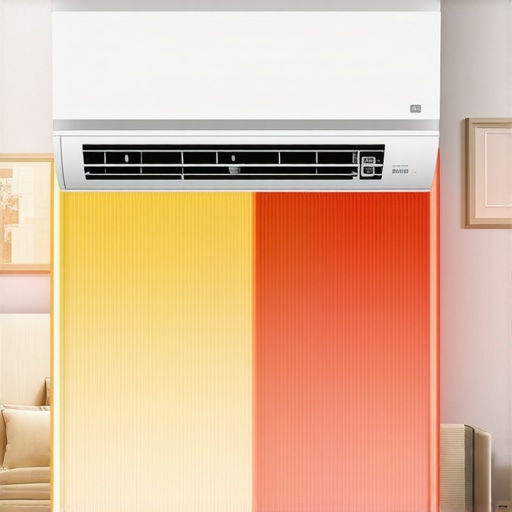
You spent thousands on a high-end ductless system, expecting surgical precision in your comfort. Instead, you’re sitting on your couch with a frozen nose while your feet are sweating three feet away. Most homeowners think the unit is out of ‘juice’—our trade slang for refrigerant—but as someone who has spent 30 years crawling through fiberglass-filled attics and dodging angry wasps on rooftops, I can tell you it’s rarely a leak. It’s physics. Specifically, it’s a failure of airflow and thermodynamic distribution. My old mentor, a legendary tin knocker named Miller, used to bark at me, ‘You can’t cool what you can’t touch!’ He was right. If the air coming out of that head unit isn’t physically reaching the far corner of the room, that corner will stay hot regardless of how hard the inverter-driven compressors are hummin’.
We see this constantly in the Northeast. People install these units in old houses where school boiler maintenance used to be the only way to stay warm, and they expect the mini-split to defy the laws of convection. Air is lazy. It wants to take the path of least resistance. If your unit is mounted too high, too low, or tucked into a corner where the ‘throw’ is blocked by a bookshelf, you’ve created a short-circuit of air. The unit sucks back in the cold air it just produced, thinks the room is satisfied, and ramps down. Meanwhile, you’re roasting in the dead zone.
“The most expensive equipment in the world cannot overcome a bad duct system—or in the case of ductless, a bad air distribution pattern.” – Industry Axiom
The Anatomy of Airflow: Why Your Fan Barrel is Lying to You
When a customer calls me for a ‘unit not cooling,’ the first thing I do isn’t grab the gauges. I look at the fan barrel. That long, cylindrical blower inside your indoor unit is a magnet for organic growth and dust. In our humid summers, the evaporator coil drops well below the dew point to remove latent heat—that’s the sticky humidity that makes 75 degrees feel like 90. That moisture lives on the coil, and dust sticks to it. If that fan barrel gets even a 1/16th inch of ‘pookie’ (our word for mastic or just general gunk) on the blades, the aerodynamics are shot. You’ll hear the motor spinning, but it won’t move the air. It’s like trying to row a boat with a toothpick. This is why top hvac repair strategies to extend your systems life always start with a deep chemical cleaning of the blower assembly.
The Thermodynamic Deep Dive: Sensible vs. Latent Heat
Let’s talk about ‘Thermodynamic Zooming.’ Your mini-split works by moving heat, not creating ‘cold.’ The R-410A refrigerant enters the evaporator coil as a low-pressure liquid. As your warm room air is pulled over that coil, the refrigerant boils, absorbing the sensible heat (the temperature you see on a thermometer) and the latent heat (the moisture). If the air isn’t moving fast enough because of a failing capacitor or a clogged filter, the coil gets too cold. It might even flash-freeze. When that happens, the heat transfer stops entirely. I’ve seen ‘sales techs’ tell people they need a whole new system for $12,000 when all they really needed was efficient hvac repairs and a $150 cleaning. They try to sell you on a ‘leak’ because they don’t want to spend two hours scrubbing a fan barrel. It’s a scam, plain and simple.
Technical Failure Points: From Contactors to Transformers
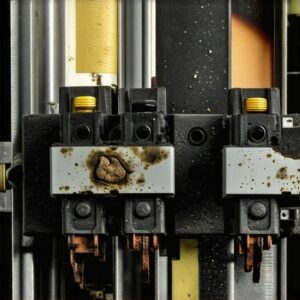
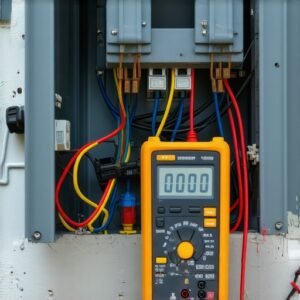
Sometimes the issue is electrical. Inverter-driven compressors are smart, but they are sensitive to power fluctuations. A simple contactor repair or a transformer replacement can be the difference between a unit that purrs and one that sits dead in the water. We often find that a sparky—that’s what we call the electricians—undersized the whip or didn’t account for the surge. If the voltage drops, the inverter board can’t maintain the frequency needed to run the compressor at full tilt. This leads to ‘short cycling,’ where the unit starts and stops before it can actually dehumidify the room. If you’re hearing a ‘chatter’ or a click, you likely need capacitor replacement services or a new contactor before the whole board fries. Unlike the old-school warehouse heating solutions I used to work on that could survive a lightning strike, these modern boards are delicate.
“Design must ensure that the air distribution system delivers the required airflow to the space to meet the calculated sensible and latent loads.” – ACCA Manual J Standards
Static Pressure and the ‘Coanda Effect’
Most people don’t know about the Coanda effect. It’s the tendency of a fluid jet—like your cold AC air—to stay attached to a convex surface. In a perfect setup, the air should hug the ceiling and drop slowly over the entire room. If your unit is poorly placed, that air ‘dumps’ straight down. This is where static pressure testing comes in. Even though it’s ductless, the internal resistance of the unit matters. If you have remote thermostat access, try moving the ‘brain’ (the remote) to the warm side of the room. This forces the unit to stay on until that specific spot reaches the setpoint. It’s a band-aid, but it proves the point: the unit can do the work, but the air isn’t reaching the target.
The Commercial Cross-Over: Schools and Warehouses
I see the same mistakes in large-scale environments. Whether I’m performing school boiler maintenance or looking at warehouse heating solutions, the problem is always distribution. In a warehouse, you might have a massive heater, but if the louvers aren’t aimed to break the thermal boundary layer, all that heat stays 30 feet in the air while the guys on the floor are shivering. Ductless mini-splits are just miniature versions of these industrial challenges. They require precision. If you’re noticing a massive temperature delta between two sides of a room, you might need a heat exchanger cleaning or a professional to re-evaluate the ‘throw’ of the air. If your tech doesn’t own a psychrometer to measure the humidity and temperature of the return air vs. the supply air, he’s just guessing with your money.
Protecting Your Investment: Priority Service Memberships
In our climate, where we swing from humid 90s to sub-zero winters, your HVAC system is the most hard-working appliance you own. It’s also the most neglected. This is why ac installation secrets always involve a maintenance plan. Joining priority service memberships isn’t just about getting a faster response when things break; it’s about the tech catching a pitted contactor or a weak capacitor before it kills your compressor. When I find a cracked heat exchanger during a routine check, I’m potentially saving a family from carbon monoxide. You can read more about how to identify when furnace repair is urgent to see the stakes involved. Don’t let a sales tech talk you into a replacement when a technician with a wrench and a brain can fix the airflow and get your room cooling evenly again. Physics doesn’t lie; people do.