The Sound of Silence: When the Furnace Quits in the Dead of Winter
There is a specific kind of silence that hits a house in the middle of a Northern winter night. It is not the peaceful kind; it is the heavy, sinking silence that tells you the mechanical heart of your home has stopped beating. You walk down to the basement, expecting the familiar hum of the blower motor, but instead, you are met with the metallic click of a relay that leads nowhere. You pull the panel off, and there it is—or rather, there it isn’t. The pilot light is out. Again. Most homeowners think they can just flick a lighter and be done with it, but as someone who has spent thirty years in the trenches of furnace repair, I can tell you that a pilot light that won’t stay lit is a symptom of a deeper mechanical protest.
The Physics Lesson: Why the Flame Matters More Than You Think
My old mentor, a grizzled master tech we called ‘The Professor,’ used to scream at me, ‘You can’t cool what you can’t touch, and you can’t heat what you don’t respect!’ He was obsessed with the physics of heat transfer. He taught me that a pilot light isn’t just a convenient match; it is a critical safety component in the combustion sequence. When that flame dies, it is often because the thermocouple—the copper rod that sits in the fire—is no longer producing the millivolts needed to hold the gas valve open. This is the Seebeck effect in action: two dissimilar metals creating an electrical current when heated. If that current drops below about 20 millivolts, the internal electromagnet in the gas valve loses its grip, and the ‘clunk’ you hear is the safety system saving your life from a gas leak.
“The most expensive equipment in the world cannot overcome a bad duct system or a neglected combustion chamber.” – Industry Axiom
The Forensic Diagnosis: Why the Flame Fails
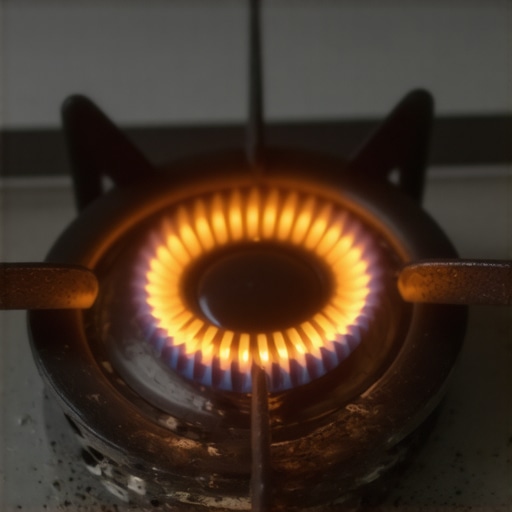
When I approach a unit that won’t stay lit, I am looking for three things: the source, the sensor, and the environment. In our cold Northern climate, where we deal with everything from 100-year-old steam boiler repair to modern high-efficiency systems, the culprits are usually consistent. First, the pilot orifice might be choked with carbon or ‘soot.’ It happens over time as the gas burns. A yellow flame is a sign of incomplete combustion; a healthy pilot should be a sharp, surgical blue. Second, the thermocouple might be physically burnt out or out of position. If it is not ‘bathed’ in the flame, it won’t generate the juice. Third, and most overlooked by the ‘Sales Techs’ who just want to sell you a new unit, is the draft. A cracked heat exchanger can cause a pressure imbalance that literally blows the pilot out like a birthday candle. This is why identifying when furnace repair is urgent is vital; a blown-out pilot could be the first warning of a carbon monoxide leak.
The 2025 Regulatory Cliff and Modern Transitions
We are currently standing on the edge of a massive industry shift. While we are still fixing pilot lights on old iron, the new world is moving toward R-454B refrigerant transition services and AI-driven HVAC optimization. Even if you are dealing with an old standing pilot today, you need to be thinking about your next move. For many in the Northeast, an oil to gas conversion is the smartest financial play, especially when combined with multi-family heating upgrades for those managing properties. The industry is moving toward modulating furnace repair and variable-speed systems that don’t even use a standing pilot, opting instead for hot surface igniters or spark-to-pilot systems that are far more reliable. But even the smartest AI-driven system will fail if your duct design services were handled by a ‘tin knocker’ who didn’t understand static pressure.
The Math: To Repair or to Replace?
If you are looking at a $200 thermocouple replacement on a 20-year-old furnace, you are just kicking the can down the road. If your heat exchanger is rusted out, that $200 is better spent on a down payment for a new system. This is where refrigerant leak detection and heat exchanger inspections come into play. A technician should be using a combustion analyzer to check the health of your system, not just a flashlight. We are seeing more homeowners opt for a blower motor replacement to squeeze another five years out of a unit, but you have to weigh that against the 98% AFUE ratings of a modern modulating furnace. Modern systems can even integrate with building management systems for AI-driven HVAC optimization, ensuring that your heating bills don’t skyrocket when the Polar Vortex hits.
“Proper sizing and selection of heating equipment shall be based on a load calculation performed in accordance with ACCA Manual J.” – ASHRAE Standards
Safe Fixes: What You Can Do (And What You Shouldn’t)
If your pilot is out, you can safely attempt to relight it once, following the manufacturer’s instructions on the panel. If it goes out again within 24 hours, stop. Do not tape the button down. Do not try to clean the orifice with a needle. You risk enlarging the hole and creating a blowtorch effect. This is the moment you call a pro who understands the nuance of the mechanical anatomy. Whether it is a simple fix or you need to discuss the secrets of installation for a new system, the goal is always the same: reliable heat and safe air. Don’t let a ‘Sales Tech’ scare you into a $15,000 system if a $20 part and some technical know-how can fix the problem, but don’t ignore the signs that your old furnace is gasping its last breath. Comfort is physics, and physics doesn’t lie. Check out more preventative HVAC repair tips to stay ahead of the curve before the next cold snap hits.