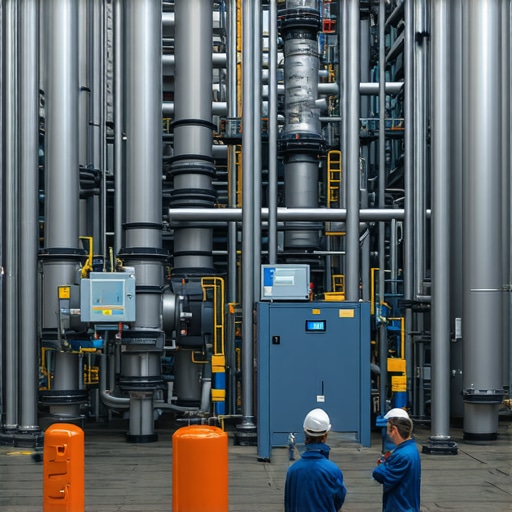
The Ghost of Physics Past: Why Airflow is Your Only Protection
Listen close, because the iron in your factory doesn’t care about your production schedule when the mercury hits ten below and the wind starts howling off the lake. My old mentor used to scream at me in the middle of a drafty warehouse, ‘You can’t heat what you can’t touch!’ He wasn’t talking about hugging the furnace. He was talking about molecular collision and boundary layers. Airflow is the soul of the machine. If you’ve got a 2-million BTU burner but your static pressure is through the roof because some ‘tin knocker’ didn’t size the returns right, you’re just burning money to heat the inside of a cabinet. That heat has to move, or the system dies. Period.
“The most expensive equipment in the world cannot overcome a bad duct system.” – Industry Axiom
We are standing on a regulatory cliff. As we push toward 2026, the industrial landscape is shifting under the weight of the A2L refrigerant transition and higher AFUE mandates. If you think you can just keep ‘topping off the juice’ on a leaking industrial heat pump, you’re in for a rude awakening. The EPA is tightening the screws, and the tech is getting more complex. Buying the cheapest box on the market right now is a one-way ticket to a frozen facility when the new sensors start tripping because of ‘mildly flammable’ refrigerant safety protocols. You need to understand the mechanical anatomy of your plant’s heating system before the first frost of 2026 turns your production line into a glacier.
1. Draft Inducer Motor Repair & Venting Integrity
In the North, where the polar vortex is a recurring nightmare, the draft inducer motor repair is your first line of defense. This isn’t just a fan; it’s a combustion safety device. It creates a negative pressure to pull the flue gases through the heat exchanger and push them out the vent stack. When these bearings start to screech—that high-pitched, metallic wail—it means the motor is drawing too many amps. Eventually, the control board diagnostics will see that the pressure switch isn’t closing, and the burner will never kick over. I’ve seen factories lose millions in downtime because a $400 motor died and nobody was listening to the warning signs. In industrial settings, we check the venting for ‘panning’ or ‘pookie’ that’s dried out and cracking, ensuring no carbon monoxide is leaking back into the work floor. This is a critical part of how to identify when furnace repair is urgent and why, especially when life safety is on the line.
2. Thermocouple Replacement & Flame Rectification Diagnostics
The thermocouple replacement might seem like a ‘small’ job, but in a heavy-duty industrial heater, that little piece of copper is the gatekeeper. It generates a millivolt signal from the heat of the pilot or the main burner to tell the gas valve it’s safe to stay open. But modern industrial units are moving toward flame rectification. The control board sends out an AC signal, and the flame itself acts as a diode, converting it to DC. If that rod is covered in carbon—a common result of poor combustion air—the board thinks there’s no flame. The unit ‘lockouts’ after three tries. You’re left with a cold factory and a ‘Sales Tech’ trying to sell you a new unit. Most of the time, it just needs a Scotch-Brite pad and a technician who actually knows how to read a multimeter. Don’t fall for furnace repair myths debunked by industry experts that claim every flame failure requires a full board swap.
3. The 2026 Pivot: Heat Pump Replacement & Solar Thermal Heating Integration
By 2026, heat pump replacement is going to look a lot different. We are moving away from R-410A to R-454B and R-32. These are A2L refrigerants. If you have a leak, you can’t just patch it and go; refrigerant leak detection becomes a matter of fire safety, as these gases are ‘mildly flammable.’ To offset the higher electrical costs of these high-efficiency pumps in cold climates, we are seeing more solar thermal heating integration. This isn’t just PV panels; it’s using the sun to pre-heat the glycol loops that feed your air handlers. It reduces the ‘lift’ the compressor has to do. When you’re dealing with 100,000 square feet, reducing that lift by 15 degrees can save tens of thousands in utility costs. This is the future of heating service innovations transforming 2025 climate control and beyond.
“Standard 62.1 specifies minimum ventilation rates and other measures intended to provide indoor air quality that is acceptable to human occupants.” – ASHRAE Standards
4. HEPA Filter Systems & The Static Pressure Trap
Every factory manager wants clean air, so they slap in HEPA filter systems. Here is the ‘Forensic Diagnosis’: a HEPA filter is incredibly dense. If your blower motor wasn’t designed for that ‘static load,’ you are effectively strangling the heater. The heat exchanger will overheat because there isn’t enough air to strip the heat away, causing the limit switch to pop. Do this enough times, and the metal will fatigue and crack. Now you’ve got a cracked heat exchanger and a CO leak. You need to balance filtration with airflow. This is why top hvac repair strategies to extend your systems life always include a static pressure test. We check the ‘suction side’ and the ‘discharge side’ to make sure the air is actually moving fast enough to keep the heat exchanger from melting into a puddle of slag.
5. Predictive Maintenance Alerts & Remote Thermostat Access
The days of ‘if it ain’t broke, don’t fix it’ are dead. In 2026, predictive maintenance alerts are the standard. We install sensors that monitor the vibration of the blower and the temperature of the ‘gas’ (refrigerant) in real-time. If the vibration on a 50-HP motor increases by 2%, the system sends a notification to my phone before the bearing ever seizes. Combined with remote thermostat access, I can see if a factory floor in Chicago is dropping to 55 degrees on a Sunday night. This allows for efficient hvac repairs that happen on a Tuesday afternoon instead of an emergency call-out at 3 AM on New Year’s Day. It’s about being proactive, not reactive. If you’re not using data, you’re just guessing, and guessing is expensive in a cold warehouse.
Closing the Circuit on 2026
Industrial heating isn’t magic; it’s thermodynamics. It’s about heat transfer, fluid dynamics, and the constant battle against entropy. Whether it’s a HVAC repair on a legacy boiler or a full-scale heat pump replacement for the new regulatory era, the rules of the game remain the same: Airflow is king, and maintenance is the tribute you pay to keep the king on his throne. Don’t let your factory be the one that freezes because you ignored a $20 capacitor or a screeching motor. Take care of the iron, and the iron will take care of you.