Fixing the ‘I forgot to turn the heat down’ problem with geofencing
The sound of a furnace firing up at 2 PM when nobody is home isn’t just the sound of comfort; it’s the sound of dollar bills being fed directly into a combustion chamber. I’ve spent thirty years crawling through spider-infested crawlspaces and balancing on ice-slicked rooftops in the dead of winter, and if there is one thing I know, it’s that humans are the weakest link in any HVAC system. We forget. We leave for work, get halfway down the interstate, and then that sinking feeling hits: Did I leave the heat at 72? In a climate where the wind chill can crack a heat exchanger, that mistake costs you more than just a high utility bill—it puts unnecessary wear on your equipment. This is where geofencing and smart logic take over, removing the human element from the thermodynamic equation.
The Physics Lesson: Why BTU Management Matters
My old mentor, a grizzled tin knocker who could smell a gas leak from a block away, used to scream at me, ‘You can’t cool what you can’t touch, and you can’t save what you don’t control!’ He’d whack his wrench against a trunk line to emphasize the point. He was talking about airflow and static pressure, but the principle applies to your thermostat too. This is the core of heating service hacks for comfort and savings in 2025. If your furnace is pushing 100,000 BTUs into an empty house, you aren’t just wasting fuel; you’re forcing the system to cycle through its startup sequence—the most stressful part of a furnace’s life—for no reason. Thermodynamics doesn’t care about your intentions; it only cares about the delta-T between your living room and the freezing abyss outside.
“The most expensive equipment in the world cannot overcome a bad duct system, nor can it overcome an inefficient operation schedule.” – Industry Axiom
The Anatomy of the Geofencing Solution
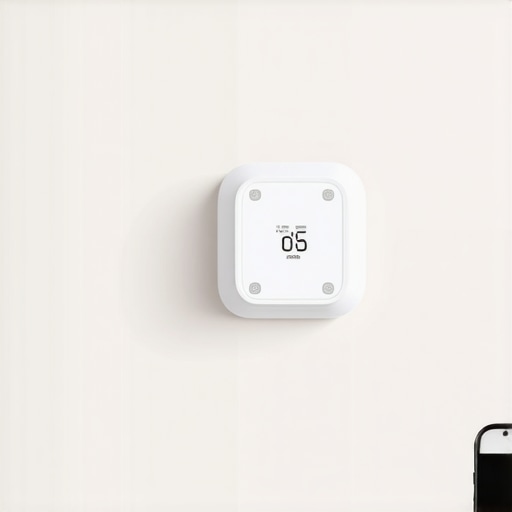
Geofencing isn’t some magic ‘cloud’ nonsense. It’s a virtual perimeter tied to your smartphone’s GPS. When you cross the ‘fence’ (say, two miles from home), the thermostat communicates with your equipment to drop into ‘Away’ mode. But for this to actually work without killing your comfort, you need a system capable of modulating furnace repair and high-level communication. A standard single-stage furnace is like a light switch—it’s either 100% on or 100% off. When you come home and the temp has dropped ten degrees, that ‘slam’ of heat causes massive expansion in the heat exchanger, which can lead to stress fractures over time. If you’re looking to upgrade, you want a modulating unit that can gently ramp up its firing rate as you get closer to home. This is why furnace repair myths debunked by industry experts often focus on why ‘bigger isn’t always better’—it’s about the control, not just the raw horsepower.
Integrating Smart Safety and Climate Control
In the North, we don’t just worry about the main house. I often get calls for garage heater installation because people want to protect their vehicles or workshops. But people forget those heaters too. Integrating these into a unified geofencing strategy ensures your garage isn’t sitting at 65 degrees while you’re at the office. However, technology isn’t a silver bullet. You still need a thermocouple replacement every now and then, and you definitely need leak detector integration. If you’re relying on a smart app to manage your home, you better have a sensor to tell you if the ‘gas’ (refrigerant) or fuel is leaking. With the shift toward low-GWP refrigerant retrofits in 2025, the new R-454B and R-32 systems actually have built-in mitigation sensors because these refrigerants are ‘mildly flammable.’ If your tech isn’t talking to you about A2L refrigerants, they are behind the times. Check out the ultimate guide to ac installation expert tips for 2025 success to see how these new regulations affect your total home comfort strategy.
Demand-Controlled Ventilation and IAQ
When you use geofencing to tighten up your heating schedule, your home’s air can become stagnant. This is where demand-controlled ventilation comes in. Modern systems don’t just move heat; they manage IAQ improvement services. If the house is empty, the system might scale back the fresh air intake to save energy, but the moment you cross that geofence, it begins an air exchange cycle. It’s about more than just temperature; it’s about the parts-per-million of CO2 and VOCs in your breathing zone. Before you go installing a bunch of fancy gadgets, you need Manual J calculations to ensure your system is sized for the actual load of your house. An oversized unit will ‘short cycle,’ meaning it turns on and off so fast it never actually de-humidifies or filters the air properly. You’ll end up with a house that’s the right temperature but feels like a damp locker room.
“Ventilation shall be provided to maintain indoor air quality in accordance with ASHRAE Standard 62.1 to ensure the health and safety of occupants.” – ASHRAE Standards
The Financial Reality: Rebates and Maintenance
I’ve seen ‘Sales Techs’ try to push $20,000 systems on folks who just needed a smart thermostat and a proper cleaning. Don’t be that homeowner. Use rebate application assistance to get credit for installing high-efficiency equipment and smart controls. Many utility companies will actually pay you to install a geofencing thermostat because it reduces the ‘peak demand’ on the grid. While you’re at it, don’t forget the basics. Portable heater safety checks are vital; I can’t tell you how many house fires I’ve seen because someone used a space heater to supplement a poorly managed furnace. If you find yourself needing a ‘booster’ heater, your main system isn’t doing its job. You might need a furnace repair urgent assessment to see if your heat exchanger is clogged with ‘Pookie’ (mastic) or if your blower motor is screaming for mercy. Maintenance isn’t a suggestion; it’s a requirement for the physics to work in your favor. If you want to know more about the long-term health of your unit, read about top hvac repair strategies to extend your systems life. Stop letting your thermostat be a ‘dumb’ switch. Move to a geofenced, modulated system and stop paying to heat an empty house. It’s physics, it’s finance, and it’s common sense. If you’re ready to stop the waste, contact us today to get a real tech—not a salesman—to look at your ductwork and your controls. Check our privacy policy for more info on how we handle your data when setting up smart home integrations.{“@context”:”https://schema.org”,”@type”:”HowTo”,”name”:”Fixing the Heat Waste Problem with Geofencing”,”step”:[{“@type”:”HowToStep”,”text”:”Install a smart thermostat that supports GPS-based geofencing and modulating furnace communication.”},{“@type”:”HowToStep”,”text”:”Set a virtual perimeter around your home, typically 2-5 miles, to trigger ‘Away’ and ‘Home’ modes.”},{“@type”:”HowToStep”,”text”:”Perform a Manual J calculation to ensure your furnace is correctly sized for the energy load.”},{“@type”:”HowToStep”,”text”:”Integrate IAQ sensors and demand-controlled ventilation to ensure air remains fresh even during low-use periods.”}]}<";script type="application/ld+json">{“@context”:”https://schema.org”,”@type”:”LocalBusiness”,”name”:”Heat Pros Services”,”description”:”Expert HVAC repair, installation, and smart home climate integration specializing in high-efficiency heating and cooling solutions.”,”url”:”https://heatprosservices.com/”}