The Sound of a Silent Disaster: Why You Should Fear the Drip
In thirty years of crawling through damp crawlspaces and balancing on freezing rafters, I’ve learned that the most dangerous sound in a mechanical room isn’t the screech of a failing bearing or the pop of a fried capacitor. It is absolute silence—specifically, the silent, rhythmic drip of condensate that isn’t making it to the floor drain. If you are hearing that drip, or worse, if you aren’t hearing it because it’s soaking into your subfloor, you’re already losing the war against latent heat and microbial growth. Most homeowners think a leak is just a puddle. As a technician who has seen the acidic/sour smell of a compressor burnout combined with the fuzzy black ‘science projects’ growing on damp drywall, I can tell you: a leak is a financial ticking time bomb.
My old mentor used to scream at me, ‘You can’t cool what you can’t touch!’ and he wasn’t just talking about airflow across a coil. He was talking about the physics of heat transfer. If your system’s airflow is restricted or if your hyper-heat heat pumps are struggling because of a clogged secondary drain, the thermodynamics of your home shift. This is where control board diagnostics and integrated leak detectors become your best friends. Without them, that moisture—the latent heat we worked so hard to pull out of your air—just sits there, inviting mold to move in and start charging rent.
“Proper condensate management is critical to maintaining indoor air quality and preventing structural damage in high-efficiency cooling and heating installations.” – ACCA Manual S
The Forensic Diagnosis: Anatomy of a Wet Failure
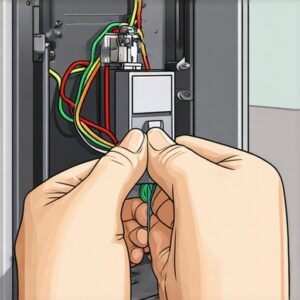
When we look at the mechanical anatomy of a modern HVAC system, whether it’s a modulating furnace repair job or a hydronic heating systems checkout, the potential for water damage is everywhere. In a high-efficiency furnace, the secondary heat exchanger is designed to squeeze every bit of energy out of the combustion process. This causes the exhaust gases to cool to the point of condensation. That liquid is acidic. If it leaks because of a cracked collector box, it’s not just water; it’s a corrosive agent that eats tin knocker work for breakfast. Integrating a leak detector directly into your control board diagnostics allows the system to shut down the moment it senses moisture where it shouldn’t be, preventing that acidic juice from destroying your floor.
Consider the hyper-heat heat pumps we install today. These units are marvels of engineering, but in the defrost cycle or during high-humidity cooling, they move a massive amount of water. If your occupancy sensor installation tells the system to ramp up while you’re home, but your drain line is backed up with ‘slime’ (microbial algae), that water has to go somewhere. Usually, it’s into your ceiling. A smart leak detector acts like a mechanical ‘kill switch.’ It’s the difference between a $150 service call to clear a line and a $15,000 mold remediation project. For those on priority service memberships, these sensors are often the first thing we check during our HVAC maintenance plans.
Thermodynamic Zooming: Why Humidity is the Real Enemy
Let’s talk about the physics of a ‘cold swamp.’ In the North, especially as we transition between seasons, we deal with high indoor humidity. If your programmable thermostat programming is off, or if you’re using spa heater services that dump extra moisture into the air near your mechanical room, your AC coil (the evaporator) has to work overtime. When the evaporator coil temperature drops below the dew point, it pulls water out of the air. This is ‘latent heat removal.’ If that water doesn’t exit through the suction line insulation or the primary drain, the relative humidity in your mechanical closet spikes to 90%+. Mold spores, which are always present, activate at roughly 60% humidity. You do the math.
Using a propane conversion services specialist to ensure your furnace is burning correctly is one part of the equation, but if that unit is leaking condensate, the fuel type doesn’t matter. The mold will grow. We often see this in hydronic heating systems where a small pinhole leak in a manifold goes unnoticed because it’s tucked behind a panel. By the time the homeowner smells the ‘musty basement,’ the pookie (mastic) on the ducts is already covered in spores. This is why we advocate for preventative HVAC repair tips that focus on the ‘wet’ side of the system.
“All condensate cooling coils shall be provided with a primary drain pipe and a secondary drain or a high-water-level monitoring device.” – ASHRAE Standard 62.1
The Math of Prevention: Repair vs. Catastrophe
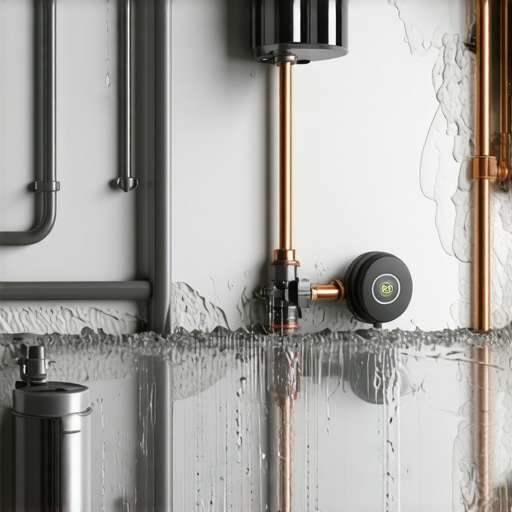
A high-quality condensate leak detector or a ‘wet switch’ costs about as much as a nice dinner out. Compared to the cost of modulating furnace repair or replacing a saturated control board, it’s the best insurance you can buy. In the world of HVAC, we have a saying: ‘Water always wins.’ It will find the path of least resistance, usually through your drywall or into your sparky’s electrical panel. If you are running spa heater services indoors or have a large hydronic heating setup, your risk profile is even higher. One failed gasket can dump gallons before you even notice the pressure drop.
We’ve seen it a thousand times: a homeowner skips their HVAC maintenance plans to save a few bucks, only to find a forest of mold growing in their plenum six months later. Because mold remediation is rarely covered by standard home insurance if it’s caused by ‘gradual seepage,’ the homeowner is stuck with the bill. If they had a leak detector integrated into their programmable thermostat programming, the system would have alerted them the moment the first teaspoon of water hit the pan. For those looking for urgent furnace repair signals, a wet floor is a 10-alarm fire.
Beyond the AC: Leak Detection in Specialized Systems
It’s not just the cooling side that needs protection. Propane conversion services often involve installing high-efficiency units that produce significant condensate. Furthermore, spa heater services and hydronic heating systems rely on a constant loop of pressurized water. A leak detector isn’t just a float switch in a pan; it can be a series of sensors placed strategically around the home. If you have priority service memberships, your tech should be testing these sensors annually with a wet rag to ensure the control board diagnostics actually trigger the shutdown. If the tech doesn’t touch the sensors, he’s just a ‘Sales Tech’ looking to sell you a new unit instead of protecting the one you have.
In 2025, with the transition to new refrigerants and even more sensitive electronics, the ‘old school’ way of just looking for a puddle isn’t enough. We need precision. We need occupancy sensor installation that coordinates with our HVAC to ensure we aren’t over-cooling (and over-condensing) empty rooms. We need modulating furnace repair specialists who understand that a leak in a high-efficiency system is a sign of a larger thermodynamic failure. Protect your home, protect your lungs, and for heaven’s sake, keep your tin knocker work dry. Moisture belongs in the drain, not in your walls.