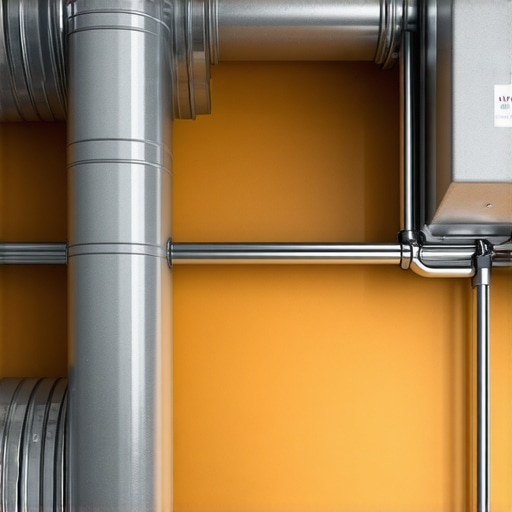
The Phantom Draft: Why Your Furnace is Fighting a Losing Battle
You can hear it, can’t you? That whistling sound coming from the registers when the blower kicks on. Most homeowners ignore it, thinking it’s just the sound of ‘air moving.’ As someone who has spent thirty years crawling through fiberglass-filled attics and cramped crawlspaces, I can tell you: that whistle is the sound of money escaping your wallet. My old mentor, a grizzled master tech named Sarge, used to scream at me during my apprenticeship, ‘You can’t cool what you can’t touch, and you can’t heat what you can’t hold!’ He’d stand over a high-efficiency furnace installation and point at the unsealed joints. ‘This unit is a Ferrari,’ he’d say, ‘but you’re trying to drive it with four flat tires.’ Sarge was right. Airflow isn’t just a component of HVAC; airflow is the heart of the entire thermodynamic cycle. If your ducts are leaking, your system isn’t just inefficient—it’s dying.
“The most expensive equipment in the world cannot overcome a bad duct system. Airflow is the vehicle that carries the energy you pay for.” – Industry Axiom
1. The SEER2 Reality Check: Why Your New Unit is Underperforming
In 2026, we are living in the era of SEER2 compliant upgrades. The federal government has pushed manufacturers to wring every last bit of efficiency out of compressors and heat exchangers. But here is the dirty secret the ‘Sales Techs’ won’t tell you: those SEER2 ratings are calculated in a lab with perfect ductwork. When you take a 16-SEER2 dual fuel heat pump system and hook it up to a duct system with 25% leakage, you effectively drop that unit back down to the efficiency of a 1990s clunker. In our cold Northern climate, where we deal with polar vortexes that turn lubricants into sludge, a leaking return duct isn’t just pulling in dust—it’s pulling in 10-degree air from your attic or crawlspace. This forces the system to run longer cycles, hammering the wiring repair for heating systems and wearing out contactors prematurely. You can learn more about expert installation tips for 2025 success to avoid these common pitfalls.
2. Static Pressure: The Silent Compressor Killer
Let’s talk physics. An HVAC blower is designed to push air against a specific amount of resistance, known as static pressure. When your ducts are leaking, or worse, when they were poorly sized by a ‘tin knocker’ who didn’t know his Manual D from a comic book, the static pressure goes out of whack. If the return side is leaking, the blower is sucking in unconditioned air, creating a pressure imbalance. This ‘Thermodynamic Zooming’ shows us that for every cubic foot of air you lose through a leak, a cubic foot of unconditioned, outside air is sucked into your home through gaps in windows, doors, and even electrical outlets. This is known as the ‘stack effect’ in cold climates. It’s why you might have a garage heater installation that feels like it’s doing nothing; the heat is literally being sucked out by the main house’s negative pressure. Proper sealing ensures that the air the unit worked so hard to heat actually reaches the living space.
3. The Danger of Flame Rollout and Carbon Monoxide
In the North, where boiler maintenance services and furnaces are life-critical, duct sealing is a safety issue. If you have a massive leak in the return air plenum (the big box attached to your furnace), it can create a localized negative pressure zone. If your furnace or water heater has a standard draft hood, that negative pressure can actually pull combustion gases—including carbon monoxide—back into the home. This is called backdrafting. During your annual heating inspection, a real tech will check the ‘draft’ to ensure this isn’t happening. If you’re smelling something ‘sour’ or ‘metallic’ near the unit, don’t wait. You need to understand when furnace repair is urgent to protect your family from silent killers.
“Supply duct leakage to the outside of the building envelope shall be no more than 4 CFM per 100 square feet of conditioned floor area.” – IECC 2021/2024 Standards
4. Maximizing Demand-Controlled Ventilation (DCV)
As we move into 2026, smart homes are becoming standard. We are seeing more occupancy sensor installation and demand-controlled ventilation systems that adjust airflow based on how many people are in a room. However, these high-tech dampers and sensors rely on a sealed ‘sealed vessel’ to work. If the ductwork is leaky, the sensors can’t accurately maintain the pressure needed to divert air to specific zones. It’s like trying to use a straw with a hole in the side; no matter how hard you suck, you’re not getting the milkshake. Sealing your ducts with high-grade ‘Pookie’ (mastic) or specialized internal sealing technology ensures these smart systems can actually do their jobs, saving you 30% on your utility bills by not heating empty rooms.
5. The ‘Suction Line’ Logic: Protecting Your Heat Pump
For those of you who have switched to a dual fuel heat pump system, duct sealing is even more critical. Heat pumps produce air that is ‘warm’ (around 95-100 degrees) compared to a gas furnace (120-130 degrees). Because the ‘Delta T’ (temperature difference) is smaller, you need every bit of that air to reach the room. If that 100-degree air travels through a freezing attic in a leaky duct, it might be 85 degrees by the time it hits the register. You’ll feel a ‘cold blow,’ and your thermostat will keep calling for heat, eventually kicking on the expensive auxiliary electric heat strips. This is why attic insulation for heating must be paired with duct sealing. Insulation keeps the heat in the room; duct sealing keeps the heat in the pipe.
6. Preventing the ‘Dirty Sock’ Syndrome and Indoor Air Quality
Ever notice a funky, musty smell when the heat first kicks on? In the trade, we call that ‘Dirty Sock Syndrome.’ While it often lives on the evaporator coil, it’s exacerbated by leaky return ducts. When your return ducts leak in a crawlspace or basement, they act like a vacuum cleaner, sucking up dust, mold spores, and rodent droppings. This ‘gas’ (refrigerant) might be cooling the coil, but the air passing over it is carrying a payload of allergens. By sealing the ducts, you ensure that the only air your family breathes is the air that has passed through your high-MERV filter. If you’re struggling with system longevity, check out these strategies to extend your system’s life.
7. Why Mastic Beats Tape Every Single Time
If you see a guy walk into your house with a roll of shiny silver ‘duct tape’ to fix your leaks, kick him out. In the 2026 HVAC world, we use mastic—a thick, gooey paste we call ‘Pookie.’ Mastic doesn’t dry out and peel off like tape does after two seasons of thermal expansion and contraction. It creates a permanent, flexible bond. When we perform a high-efficiency furnace installation, we ‘slather the Pookie’ on every joint, from the plenum to the boots. It’s messy, it’s a pain to get off your hands, but it’s the only way to ensure the system holds pressure for the next twenty years. If your current system feels sluggish, it might be time for efficient repairs that provide a blueprint for comfort.
The Bottom Line: Don’t Be a ‘Sales Tech’ Victim
In my thirty years, I’ve seen thousands of homeowners drop $15,000 on a brand-new, top-of-the-line system only to complain that their house is still drafty or their bills are still high. It’s heartbreaking. Before you buy more ‘juice’ for your unit or replace a compressor, look at the delivery system. Duct sealing is the single most cost-effective upgrade you can make in 2026. It protects your equipment, slashes your bills, and ensures that when the next polar vortex hits, your home stays a sanctuary, not a wind tunnel. If you’re ready to stop the leaks and start saving, contact us today for a full diagnostic airflow analysis. Don’t let your hard-earned money whistle through the cracks.
http://Sarah%20Rodriguez
Reading this post really opened my eyes to the importance of duct sealing beyond just energy efficiency. In my experience, sealed ducts have made a noticeable difference in indoor air quality as well. I used to deal with that ‘dirty sock syndrome’ where the house would smell musty when the heat first came on, and after sealing my return ducts in the basement, the smell disappeared. It’s impressive how these leaks not only waste money but can also introduce allergens and mold spores into the system, affecting health. I’ve also noticed that sealing ducts helped to stabilize my home’s temperature, especially during those cold snaps. Does anyone have advice on the best sealing materials or techniques that stand up long-term, especially in older homes with tricky duct layouts? I’d love to hear from others who’ve tackled duct sealing themselves or had it professionally done.