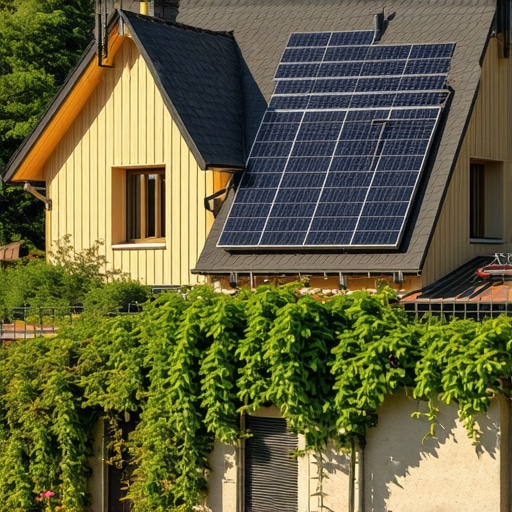
Solar Thermal Heating Integration: The Airflow Architect’s Guide to 2026
You ever smell a cracked heat exchanger in a basement at 3 AM? It is the smell of a mortgage payment burning, mixed with that metallic, ozone-heavy scent that tells you a family is breathing what they should not. I have been crawling through spider-infested crawlspaces and balancing on frozen commercial rooftops for thirty years, and if there is one thing I have learned, it is that the physics of heat do not care about your feelings or your marketing brochures. Most guys calling themselves technicians today are just ‘Sales Techs’—glorified retail clerks in work boots who could not troubleshoot a toaster if their life depended on it. They will walk into your house, see a fifteen-year-old furnace, and start writing up a $15,000 quote before they even pull the service door off. I remember following one of these guys to a local bistro last winter. The owner was told his entire rooftop unit was ‘terminal’ and needed a full replacement. I climbed up there in a biting wind, found a loose flue pipe installation that was tripping the pressure switch, and had him running for the cost of a service call and some high-temp silicone. I told him, ‘Save that fifteen grand and put it into solar thermal integration if you really want to lower your overhead.’ That is where the industry is going in 2026, but only if you do it right.
The Thermodynamic Reality of Solar Integration
When we talk about solar thermal heating integration, we are not talking about those shiny blue photovoltaic panels that make electricity. We are talking about moving BTUs—actual heat—from the sun directly into your hydronic loop or air stream. In the North, where the polar vortex turns your heat pump into a glorified lawn ornament, solar thermal is a lifeline. But here is the thing: heat moves from hot to cold. Always. If your attic insulation for heating is non-existent, you are just heating the neighborhood. You have to understand the latent heat of vaporization and how your system handles the load. When the sun hits those vacuum tubes on your roof, they are collecting sensible heat. We then pump that through a heat exchanger to pre-heat the return air or the water entering your boiler. If you are running hotel boiler services or a large residential estate, this integration can offset 40% of your gas bill, but it requires precise airflow measurement services to ensure you are not over-pressurizing the plenum.
“Designers shall use the procedures outlined in ACCA Manual J to ensure the heating and cooling equipment is sized to meet the building’s calculated loads.” – ACCA Standard 5
This is not just a suggestion; it is the law of physics. If you over-size the system because you think ‘more is better,’ the unit will short-cycle, your humidity will spike, and you will be calling me to scrub mold off your coils in three years.
1. Hybrid Modulating Furnace Integration
The first way to save money in 2026 is by pairing solar thermal with modulating furnace repair and installation. A standard furnace is either on or off—it is like a car that only goes 0 or 100 miles per hour. A modulating furnace, however, can run at 40% capacity, sipping gas while the solar thermal loop provides the ‘base’ heat. This is where the ‘Tin Knockers’ and the ‘Sparkys’ have to actually talk to each other. We use a solar coil in the return air drop. As the air comes back from the house, it gets a free 20-degree boost from the sun before it even touches the primary heat exchanger. This reduces the delta-T the furnace has to overcome. If you have been looking for heating service innovations transforming 2025 climate control, this hybrid approach is the gold standard. It keeps the ‘juice’ (electricity) and the ‘gas’ (fuel) consumption at an absolute minimum.
2. Infrared and Radiant Zone Optimization
In high-ceiling environments or warehouses, we are seeing a massive shift toward infrared heater installation supplemented by solar-heated glycol. Infrared does not heat the air; it heats the objects—the floor, the tools, the people. By using solar thermal to pre-heat the thermal mass of a concrete floor (radiant heating), and using infrared for ‘spot’ comfort, you eliminate the massive heat loss associated with traditional forced air. This is crucial for restaurant kitchen exhaust repair scenarios where you are constantly sucking conditioned air out of the building. You cannot afford to heat air just to blow it out a grease hood. You need to heat the surfaces.
“Effective ventilation must balance the replacement of exhausted air with tempered makeup air to maintain building pressure.” – ASHRAE Standard 62.1
When we integrate solar here, we are using the sun to temper that makeup air so your primary heaters do not have to work overtime every time the chef turns on the fans.
3. The Envelope: Attic Insulation and Flue Integrity
I have said it a thousand times: you can’t cool (or heat) what you can’t touch. If your ductwork is leaking in the attic, you are literally throwing money into the wind. I use ‘Pookie’ (that is mastic to you civilians) on every joint because tape fails, but Pookie is forever. In 2026, saving money starts with attic insulation for heating. If you have R-19 insulation and you are trying to install solar thermal, you are an idiot. You need R-49 or better in cold climates to keep that solar gain inside the envelope. Furthermore, proper flue pipe installation ensures that your backup gas systems are venting safely. A blocked flue is not just an efficiency killer; it is a death sentence. We see it all the time with evaporative cooler services in the transitional seasons—people forget to switch over their venting logic, and carbon monoxide starts backing up. This is why how to identify when furnace repair is urgent and why is the most important thing a homeowner can learn. If you see soot or smell something sour, get out and call a pro.
4. IAQ and Airflow Precision
Finally, money is saved through IAQ improvement services. Dirty air is heavy air. If your filters are clogged or your coils are matted with pet hair, your blower motor has to work twice as hard. This increases the static pressure, which kills the efficiency of your solar integration. We use airflow measurement services to dial in the ‘Suction Line’ pressure until it is ‘beer can cold’—which is how we old-timers know the refrigerant charge is close, though nowadays we use digital manifolds for the final tenth of a percent. By keeping the air clean and the flow unrestricted, the solar thermal system can contribute more to the total heating load. If you are on one of our top hvac repair strategies to extend your systems life, you know that a clean system is a cheap system. Do not let a sales tech talk you into a $2,000 UV light until you have fixed your static pressure issues first.
The 2026 Regulatory Trap
As we move into 2026, the EPA is tightening the screws. We are moving away from R-410A to A2L refrigerants like R-454B. They are ‘mildly flammable,’ which sounds scary but just means we have to be smarter. The sensors required for these new systems add cost, which makes solar thermal even more attractive because it is a simple, low-pressure system that does not fall under the same heavy-handed regulations. If you are looking for heating service hacks for comfort and savings in 2025 and beyond, look at warranty service plans that cover these new sensors. A single failed A2L leak detector can cost you $400 out of pocket if you are not covered. At the end of the day, comfort is physics, not magic. You need a tech who knows how to read a psychrometric chart, not just a guy who knows how to swipe a credit card. Keep your coils clean, your insulation thick, and let the sun do the heavy lifting.