The Physics of Heat Transfer and Why Your Furnace Is Screaming for Help
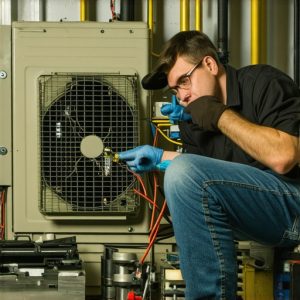
My old mentor, Bill, a man who had more soot in his lungs than a Victorian chimney sweep, used to scream at me every time I looked at a manifold pressure gauge without checking the metal first: ‘You can’t heat what you can’t touch!’ It took me a decade of crawling through spider-infested crawlspaces in the dead of a Chicago winter to realize he wasn’t just being a cranky old-timer. He was talking about the fundamental thermodynamics of your furnace. If your heat exchanger is coated in a layer of carbon, dust, or oxidation, that expensive gas you’re burning isn’t warming your living room; it’s just flying out the flue pipe while your blower motor works itself to death.
“Proper maintenance of the heat transfer surfaces is critical for both the longevity of the equipment and the safety of the occupants.” – ASHRAE Standard 155P
In the trade, we see a lot of folks who think they need an emergency heating repair because their unit is making a racket that sounds like a ball bearing in a blender. Usually, it’s not the bearings. It’s the heat exchanger expanding and contracting unevenly because it’s choked with gunk. When we talk about cleaning a heat exchanger, we aren’t just dusting off the outside; we are talking about ensuring the boundary layer of air can actually absorb the thermal energy from the combustion process. Without this, you get short cycling, high fuel bills, and a furnace that sounds like a haunted house.
The Forensic Diagnosis: Anatomy of a Clogged System
Let’s perform a little mechanical anatomy. The heat exchanger is essentially the lungs of your HVAC system. It separates the toxic combustion byproducts (carbon monoxide, nitrogen oxides) from the air you breathe. When the burners ignite, they shoot a flame into the ‘clamshells’ or tubes. These tubes get hot—really hot. The blower then pushes return air over these tubes. This is where Thermodynamic Zooming comes in: the heat moves via conduction through the metal wall and then via forced convection into your air stream. If that metal has a ‘soot-blanket,’ the thermal resistance increases. The heat stays trapped in the metal, causing it to overheat, warp, and eventually crack.
A cracked heat exchanger isn’t just a repair issue; it’s a death sentence for the unit and a major safety hazard. This is why furnace repair myths debunked by industry experts often center around the idea that you can just ‘patch’ a crack. You can’t. If the metal is compromised, the gas leaks. Period. Before we get to that point, a simple furnace flame sensor cleaning and a thorough scrubbing of the exchanger surfaces can save you $10,000 in replacement costs.
The North Climate Reality: Why Efficiency Drops When the Mercury Hits Zero
In cold climates like the Northeast or the Midwest, your furnace isn’t just a luxury; it’s life support. When the outdoor ambient temp drops to -10°F, your system is running nearly 100% duty cycle. In these conditions, static pressure testing becomes vital. If your heat exchanger is dirty, it creates a physical restriction. This increases the static pressure, making your blower motor draw more amps. It’s like trying to run a marathon while breathing through a cocktail straw. You might finish, but your heart (the motor) is going to explode halfway through.
“Undersized ductwork and high static pressure are the primary causes of premature heat exchanger failure.” – ACCA Manual D
While I’m in there, I’m checking the thermostat wiring upgrades and ensuring your programmable thermostat programming isn’t forcing the unit to ramp up too fast. A slow, steady heat is always better for the metal than a sudden blast that causes rapid thermal expansion. If you’ve been considering a top HVAC repair strategy to extend your system’s life, cleaning the secondary heat exchanger (on 90%+ AFUE units) is the single most overlooked task in the industry.
The Tech’s Secret: It’s Not Always the Gas
Sometimes the issue isn’t even the furnace itself but how it’s being told to behave. I’ve walked into houses where the owner complained of a ‘whining’ furnace, only to find a botched thermostat installation where the C-wire was sparking against the chassis, or a remote thermostat access module that was cycling the gas valve every three minutes. This ‘chatter’ kills heat exchangers because the metal never gets to a stable operating temperature. It’s constantly expanding and contracting, which leads to metal fatigue.
And don’t get me started on ‘Sales Techs’ who see a little bit of surface oxidation and try to sell you a full heat pump installation or a new AC installation bundle for $20,000. Most of the time, some high-pressure air, a soft-bristle brush, and a combustion analysis are all you need to get another five years out of that ‘old’ box. If you are managing a larger facility, like school boiler maintenance, the scale of the heat exchanger is even more critical because the sheer volume of air moving can wear down thin spots in the metal if the airflow isn’t balanced.
Final Verdict: Maintenance vs. The Scam Tune-Up
A real tune-up involves more than just a ‘Sparky’ checking the voltage. It requires a technician who understands that ‘Pookie’ (mastic) on the plenum is better than foil tape and that the ‘Juice’ (refrigerant) levels in the summer affect the coil cleanliness in the winter. If your furnace is noisy, it’s vibrating. If it’s vibrating, something is out of balance or restricted. Contact us before that vibration turns into a crack. A clean heat exchanger is silent, efficient, and—most importantly—safe. Don’t let a ‘Tin Knocker’ tell you otherwise; the metal doesn’t lie. Keep it clean, keep the static pressure low, and your furnace will outlive your mortgage.