The Sound of a $20,000 Mistake
I’ve spent thirty years crawling through spider-infested crawl spaces and dragging my manifold gauges across blistering tar roofs, and if there is one thing I’ve learned, it’s that water is a more patient enemy than heat. You can feel a failing compressor from a mile away—that distinct, acidic, sour stench of burnt windings—but a condensate leak? That’s a silent killer. I remember my old mentor, a grizzled old tin knocker who could bend ductwork with his bare hands, used to scream at me, ‘You can’t cool what you can’t touch! Airflow is the blood, but the condensate is the poison you’ve gotta get out of the house!’ He was right. If that water doesn’t have a clear path out, it’ll find one through your ceiling or into your finished basement. This isn’t just about HVAC repair; it’s about mechanical forensic science.
“The removal of latent heat from the conditioned space requires the effective management of condensate disposal systems to prevent property damage and indoor air quality issues.” – ASHRAE Standard 62.1
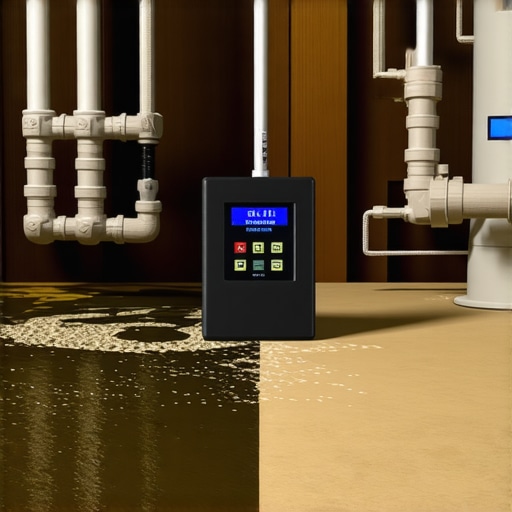
Last November, I walked into a basement in a high-altitude climate where the homeowner was dealing with a literal indoor pond. Their high-efficiency furnace was sweating bullets because the secondary heat exchanger was clogged, and the primary drain line was backed up with ‘slime’—a lovely mixture of dust and bacteria. Because they skipped their annual heating inspection, the pressure switch finally tripped, but not before gallons of water dumped into the drywall. We fixed it by integrating a simple moisture sensor into their smart thermostat setup. That $150 upgrade saved them from a $20,000 mold remediation bill. It’s the difference between a pro job and some ‘Sales Tech’ trying to sell you a whole new system because he doesn’t know how to use a shop-vac.
Thermodynamics of the Wet Basement
When your evaporator coil—that big A-frame of copper and aluminum fins—drops below the dew point, it starts pulling ‘latent heat’ out of the air. That’s the humidity. In a dry climate where swamp cooler maintenance is common, people forget that a standard AC or heat pump is a massive dehumidifier. That water has to go somewhere. If your crawl space heating solutions aren’t properly pitched, or if your condensate pump fails, that water backs up. I’ve seen ‘Pookie’ (mastic) used to try and seal a cracked drain pan—don’t do that. It’s a hack move. You need a mechanical float switch and a leak detector that talks to your phone via remote thermostat access. If the pan fills up, the ‘juice’ (power) to the outdoor unit gets cut immediately. No more water, no more flood.
The Anatomy of a Furnace Failure
Most folks think their furnace is just a box that makes fire. It’s a complex respiratory system. If you haven’t performed a furnace flame sensor cleaning lately, your unit might be short-cycling. The sensor is a small rod that uses flame rectification to tell the control board, ‘Hey, we have fire, don’t blow the house up.’ When it gets covered in carbon or oxidation, it fails. The unit shuts down, restarts, and repeats. This stresses the heat exchanger and, in high-efficiency units, creates more condensate than the system can handle. This is why programmable thermostat programming needs to account for steady run times rather than constant swinging. Sudden shifts in temperature cause expansion and contraction in the metal, leading to cracks. This is a primary focus during any urgent furnace repair scenario.
“Equipment shall be installed in accordance with the manufacturer’s instructions and the requirements of the HVAC system design.” – ACCA Manual J
The Airflow Manifesto: Why Insulation Matters
You can have the best 18-SEER2 variable speed compressor in the world, but if your attic insulation for heating is thin, you’re just cooling the neighborhood. We call it ‘losing the load.’ In the winter, heat rises and escapes through your ceiling, pulling cold air in through the rim joists of your basement. This creates a ‘stack effect.’ Proper insulation keeps the heat in the ‘envelope.’ If your attic is drafty, your furnace runs 20% longer, which means your demand-controlled ventilation system is working overtime, and your components are wearing out twice as fast. I always tell homeowners to check their R-value before they check their brand of AC. HVAC repair often starts with a roll of fiberglass, not a wrench. For those looking for more detail, checking out strategies to extend system life is a good start.
The 2025 Regulatory Cliff: R-454B and Beyond
We are entering a weird era. The old ‘gas’ (refrigerant) like R-410A is being phased out for A2L refrigerants like R-454B. These are ‘mildly flammable.’ If you have a leak in a basement or crawl space now, you don’t just lose cooling; you potentially have a safety hazard. This makes leak detectors mandatory, not optional. Integrating these into a smart thermostat setup allows the system to shut down and ramp up the blower to dissipate any refrigerant concentration. If you’re considering new AC installation in 2025, you need to ensure your ‘Sparky’ (electrician) and your HVAC tech are on the same page about the new sensor requirements.
Repair vs. Replace: The Cold Hard Math
I hate Sales Techs who see a dead capacitor and quote a $15,000 system replacement. A capacitor is a $50 part. However, if your compressor has ‘slugged’ liquid because of a flood or a failed TXV, and the unit is over 12 years old, the math changes. You have to look at the ‘Suction Line.’ If it’s not ‘beer can cold’ and your head pressure is through the roof, the internal valves are likely toast. At that point, dumping $2,000 into an old R-22 or R-410A system is throwing good money after bad. You’re better off looking into efficient HVAC repair blueprints to see if a retrofit or a full swap is your best bet. Always ask for a static pressure test. If they don’t know what a manometer is, kick them out of your house.
Summary of Preventative Steps
To avoid a basement catastrophe, follow this checklist: 1. Install a secondary drain pan with a float switch. 2. Integrate a Wi-Fi-enabled leak detector. 3. Clean your furnace flame sensor annually. 4. Ensure your attic insulation for heating is up to spec. 5. Never skip the annual heating inspection. This isn’t just about comfort; it’s about protecting the structural integrity of your home. Physics doesn’t care about your budget, but a little bit of ‘Pookie’ in the right place and a lot of technical knowledge will keep you dry and warm.