The 2025 Regulatory Cliff: Why Your Thermostat Needs a Brain and a Guard Dog
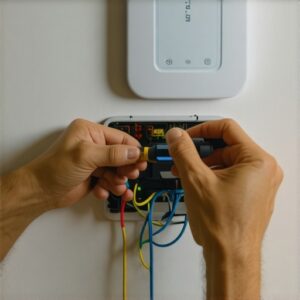
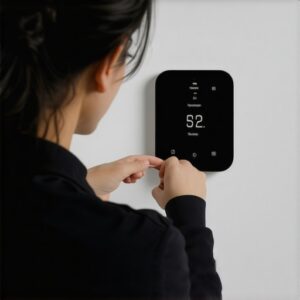
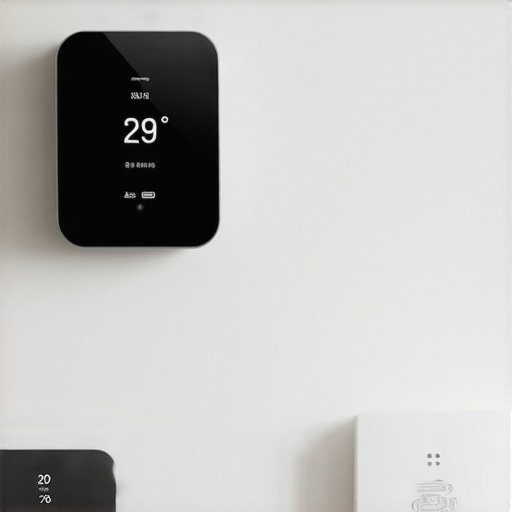
Listen, I’ve spent thirty years crawling through blown-in cellulose in attics and dragging my tool bag across ice-covered rooftops in the dead of a Chicago winter. I’ve seen the industry go from simple mercury bulbs to these high-tech ‘smart’ interfaces that look more like iPads than climate controls. But here’s the cold, hard truth that most ‘Sales Techs’ won’t tell you: we are standing on the edge of a regulatory cliff. With the 2025 phase-out of R-410A and the mandatory transition to A2L refrigerants like R-454B—which are ‘mildly flammable,’ mind you—the days of ‘set it and forget it’ are over. You don’t just need a thermostat anymore; you need a central nervous system for your home. Integrating a leak detector with your smart thermostat isn’t just about ‘peace of mind’; it’s about physical safety and protecting a massive investment.
“The most expensive equipment in the world cannot overcome a bad duct system, nor can it survive a neglected leak in a high-pressure environment.” – Industry Axiom
My old mentor, a grizzly veteran we called ‘Gauges’ Gus, used to scream at me whenever I’d just glance at a sight glass. ‘You can’t cool what you can’t touch, and you can’t fix what you aren’t measuring!’ he’d bark. He believed that airflow was the lifeblood of the home, but the sensors were the heartbeat. Gus knew that a tiny refrigerant leak or a cracked heat exchanger wasn’t just a repair bill; it was a thermodynamic failure. If you’re looking into a two-stage furnace installation, you’re already stepping into the world of complex logic. A two-stage unit doesn’t just blast air; it modulates. In Stage 1, it sips fuel and moves air slowly to keep temperatures even. But if you have a slow refrigerant leak in that evaporator coil, a standard thermostat will just keep calling for cooling until the compressor burns out, smelling like a sour, acidic mess that’ll haunt your nostrils for weeks. By integrating a leak detector, the system kills the power before the ‘juice’ is gone, saving you an $8,000 compressor swap.
Thermodynamic Zooming: The Latent Heat Battle
In our northern climate, we deal with extreme sensible heat shifts, but people forget about the latent heat—the humidity. When we perform dehumidification services, we aren’t just ‘making it less sticky.’ We are using the evaporator coil to drop the air temperature below the dew point. The water vapor condenses into liquid and drains away. But what happens when that primary drain line clogs with ‘algae snot’? If you don’t have a moisture sensor tied to your smart thermostat, that water ends up in your ceiling. A smart integration can send a push notification to your phone the second a drop of water hits the secondary pan, or better yet, shut down the system entirely to prevent a localized flood.
For those of you with a zoning system installation, the stakes are even higher. You’ve got dampers opening and closing, changing the static pressure in the ‘tin’ (ductwork) constantly. If your ‘tin knocker’ didn’t size those ducts right, you’re already fighting high head pressure. Adding a smart thermostat with geofencing temperature control allows the system to ramp down when you’re five miles away, but if a leak detector picks up a gas whiff or a refrigerant drop while you’re at work, the geofencing becomes a secondary priority to the safety shutdown. It’s about layers of defense.
The Combustion Analysis and The Cracked Heat Exchanger
When I do a combustion analysis on an old furnace, I’m looking for the ‘silent killer.’ Carbon Monoxide (CO) is the result of incomplete combustion. Often, this is caused by a cracked heat exchanger. You might think your old baseboard heater repair was a pain, but a furnace with a breached wall is a death trap. Modern smart thermostats can now bridge with CO detectors. If the sensor detects a rise in CO levels, it can trigger the smart thermostat to turn off the furnace and, in some high-end setups, turn on the HVAC fan to circulate fresh air (if you have an ERV/HRV integrated). This is why identifying when furnace repair is urgent is so critical—the ‘check engine light’ for your house is your smart hub.
“Safety standards require that any system containing A2L refrigerants must have active leak detection and mitigation strategies to prevent flammable concentrations.” – ASHRAE Standard 15
We also need to talk about attic insulation for heating. You can spend $15k on the fanciest furnace, but if your attic is a sieve, you’re heating the neighborhood squirrels. However, thick insulation often hides the ‘pookie’ (mastic) on the duct joints. If those joints leak, your system works harder, runs hotter, and dies younger. A smart leak detector isn’t just for fluids; some advanced sensors monitor pressure drops that indicate a catastrophic duct failure. It’s all connected. Even your fireplace insert services or solar thermal heating integration should be tied into this central brain. If the solar thermal loop leaks its glycol, you want to know before it ruins your roof shingles.
Why the ‘Sales Tech’ Wants You to Ignore This
The ‘Sales Tech’—those guys in the crisp white shirts who haven’t seen a drop of oil on their hands in a decade—want to sell you a whole new system every time a capacitor pops. They won’t talk about preventative hvac repair tips because there’s no commission in a $200 sensor. But as a guy who’s replaced more compressors than I can count, I’m telling you: the ‘gas’ (refrigerant) is getting more expensive every day. R-410A prices are spiking because the EPA is squeezing production. A leak today costs three times what it did five years ago to fix. Integrating a leak detector into your thermostat allows for ‘surgical’ repairs. Instead of finding out your system is empty and the compressor is fried (the ‘sour’ smell of death), you find out you have a ‘micro-leak.’ We can find it, braze it, and recharge it before the equipment is compromised.
If you’re dealing with a dry climate or high-efficiency needs, humidifier installation is another failure point. I’ve seen brand-new hardwood floors buckled because a solenoid valve on a humidifier stuck open. A water leak sensor at the base of the furnace, tied to your thermostat, would have shut the water main or at least alerted the homeowner before the ‘lake’ formed in the basement. This is the ‘blueprint’ for modern comfort. It’s not just about the temperature; it’s about the integrity of the entire thermodynamic cycle. Don’t be the person who ignores the tech until the house is 45 degrees or 95 degrees inside. Use the tools available in 2025 to keep the ‘sparkies’ and ‘tin knockers’ away for as long as possible. For more technical deep dives, check out our efficient hvac repairs blueprint and ensure your system is actually doing its job.