I’ve spent thirty years listening to the rhythmic thrum of blowers and the occasional, heart-stopping screech of a failing bearing on a rooftop in a blizzard. You don’t survive three decades in this trade without learning that the industry moves in cycles, much like the refrigerant through a suction line. My old mentor used to scream at me, ‘You can’t heat what you can’t touch!’ This is why airflow matters more than horsepower, and it’s a lesson that property managers are about to learn the hard way as we hit the R-454B transition. If you think your biggest headache is a simple furnace repair, you’re looking at the small picture. We are staring down a regulatory cliff that changes how we handle ‘the juice’—the refrigerant—and the equipment that pumps it.
The Death of R-410A and the Birth of A2L Refrigerants
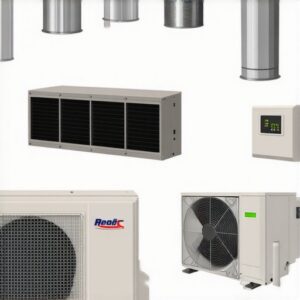
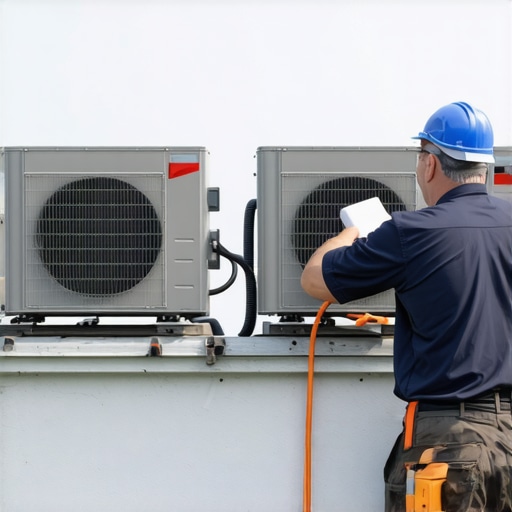
For years, R-410A was the standard, but its Global Warming Potential (GWP) has put it on the EPA’s chopping block. Enter R-454B and R-32. These are classified as A2L refrigerants, which is industry-speak for ‘mildly flammable.’ Don’t let the sales techs scare you into a $20,000 upgrade by claiming your building is a tinderbox, but do understand that the physics of these systems are different. Because of that ‘mildly flammable’ tag, new units will require factory-installed leak sensors and mitigation boards. This isn’t just another ‘SEER2 compliant upgrade’; it’s a fundamental change in how we install and maintain equipment. If a sensor trips, the system will lock out and force the blower to run to dilute any potential gas buildup. For a property manager, this means more complex top HVAC repair strategies are needed to keep these sensors calibrated and functioning.
“The most expensive equipment in the world cannot overcome a bad duct system.” – Industry Axiom
Why Load Calculations and Ductwork are the New Frontier
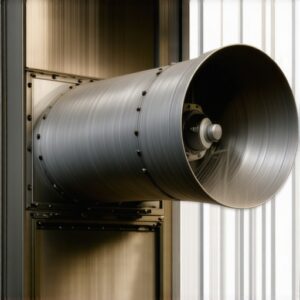
I’ve seen ‘Sales Techs’ walk into a boiler room, look at the nameplate of an old unit, and quote a replacement of the same size. That’s a scam. In the north, where we deal with cracked heat exchangers and the constant threat of carbon monoxide, an oversized furnace is a death sentence for efficiency. It short-cycles, never reaching a steady state, and kills the heat exchanger prematurely. Before you sign off on a massive capital expense, demand HVAC load calculation services. We need to know the ‘Manual J’ requirements for the building as it stands today—not how it was built in 1980. Proper HVAC duct sealing with high-grade ‘Pookie’ (mastic) is often more effective at improving tenant comfort than just throwing more tonnage at the roof. If the ‘Tin Knocker’ who did the original install left gaps, your expensive conditioned air is heating the attic, not the apartments.
The Dual Fuel Revolution in Cold Climates
In our climate zone, the polar vortex is real. A standard heat pump can struggle when the mercury drops below zero, which is why dual fuel heat pump systems are the gold standard for property managers looking to hedge their bets. These systems use an electric heat pump for moderate cold and flip over to a gas furnace when things get ‘Chicago-in-January’ brutal. This setup qualifies for significant rebate application assistance, making the initial sticker shock of the R-454B transition a bit easier to swallow. We’re also seeing a massive uptick in snow melt systems installation for commercial entryways to reduce liability and salt damage to the interior flooring. [IMAGE_PLACEHOLDER] Combining these with occupancy sensor installation in common areas ensures you aren’t heating a lobby that nobody is standing in.
Maintaining the Old Guard: Radiators and Commercial Furnaces
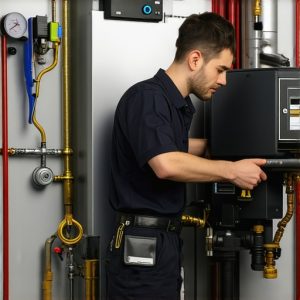
While everyone is talking about 2025 regulations, you’ve still got buildings running on steam and hot water. Radiator replacement isn’t a lost art, even if the new kids in the trade act like it is. A clogged radiator or a failing steam trap can throw an entire wing of a building out of balance, leading to the dreaded ‘one room is a sauna, the other is a freezer’ complaint. Similarly, commercial furnace repair on older atmospheric units requires a tech who knows how to read a flame and check for rollout—not just someone who can plug in a laptop. If you’re managing an older portfolio, you need a technician who understands the ‘thermodynamic zoom’—how the evaporator coil drops below the dew point to strip latent heat out of the air, or how a heat exchanger transfers sensible heat to the plenum without leaking lethal gases.
“Properly sizing the equipment is the first step toward achieving comfort and efficiency.” – ACCA Manual J
The Property Manager’s Strategy for 2025
Don’t wait until the ‘July 4th Panic’ when your 15-year-old R-410A unit finally gives up the ghost. The cost of ‘gas’—refrigerant—is going to skyrocket as production is phased down. Start transitioning your high-priority zones now to SEER2 compliant equipment. When you do, make sure your techs aren’t just ‘topping off’ systems. A leak is a hole, and a hole needs a permanent fix. Using HVAC duct sealing and ensuring your ac installation follows the new A2L standards will save you from the liability of improper venting. This isn’t magic; it’s physics. Whether it’s a furnace repair or a full system overhaul, the goal is the same: moving air efficiently and safely. If you’re feeling overwhelmed by the technical jargon, remember that contact us is always an option for a second opinion on a ‘Sales Tech’ quote that seems too high to be true.