The Forensic Diagnosis of a Dying Heat Source
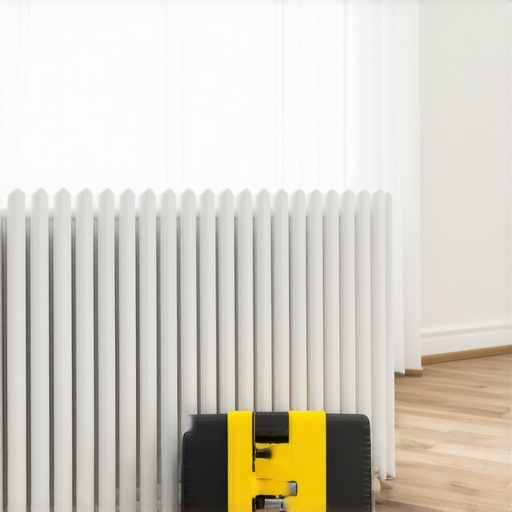
The silence of a dead radiator in the middle of a January polar vortex is a specific kind of terrifying. It’s not just the cold; it’s the sound of silence where there should be a rhythmic clink-clink-hiss. I’ve spent thirty years in the trenches of the North, crawling through basements that haven’t seen a flashlight since the Nixon administration, and I’ve seen homeowners get fleeced by ‘Sales Techs’ who don’t know a steam trap from a hole in the ground. They’ll look at a 50-year-old cast iron radiator and tell you it’s ‘obsolete’ before they even check the air vent. That’s garbage. Radiators are the tanks of the HVAC world, but even tanks need a mechanic who understands physics, not just a commission check.
“The most expensive equipment in the world cannot overcome a bad duct system—or in the case of hydronics, a poorly piped loop.” – Industry Axiom
The Physics Lesson: Why Airflow (and Water Flow) is King
My old mentor, a ‘Tin Knocker’ who could shape galvanized steel with a look, used to scream at me, ‘You can’t heat what you can’t touch!’ He was talking about the boundary layer of air around those cast iron fins. This is the core of Thermodynamic Zooming: your radiator doesn’t just ‘get hot.’ It works via convection and radiation. If that radiator is caked in thirty layers of lead paint or hidden behind a thick wooden cover, the convective loop is broken. The water inside is screaming at 180°F, but it can’t surrender its BTUs to the room. This is why system performance testing is the first thing I do. I don’t care what the thermostat says; I care what the Delta T (temperature difference) is between the supply and return lines. If the heat isn’t moving, you don’t need a new radiator; you need to fix the physics.
The Anatomy of Failure: Repairing the ‘Unrepairable’
When I’m called to look at church heating systems, I’m often dealing with massive, ornate radiators that a Sales Tech would quote $50,000 to replace with a ‘modern’ forced air system. That’s a scam. Most radiator ‘failures’ are actually just peripheral component deaths. The ‘heart’—the cast iron—is fine. It’s the ‘valves’ and ‘veins’ that go. We’re talking about steam traps that have seized shut or air vents that have turned into solid blocks of corrosion. I’ve seen radiators that people thought were ‘leaking’ when it was actually just a $15 spud nut that needed a quarter-turn. Before you consider replacement, you need a pro to perform a heat exchanger cleaning on the boiler and a full inspection of the radiator’s nipples and bushings. If the iron isn’t cracked, it’s usually salvageable.
The Replacement Threshold: When to Pull the Plug
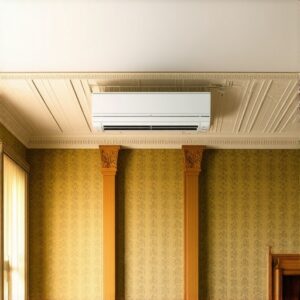
So, when is it actually time to swap? It comes down to the ‘Cast Iron Math.’ If the radiator is leaking from a vertical crack in a section, you’re usually done. You can try to epoxy it, but that’s like putting a Band-Aid on a gunshot wound; the thermal expansion and contraction will eventually rip it open. Another sign is ‘internal scaling’—decades of hard water buildup that has effectively narrowed the internal diameter of the loops to the size of a straw. This is where smart building management sensors come in handy; they can tell us if the flow rate has dropped below the threshold of efficiency. If you’re constantly fighting ‘air-bound’ sections and the iron is pitting, replacement is the move. But don’t just go back with another old-school unit without looking at dual fuel heat pump systems as a backup for the shoulder seasons. Sometimes the most cost-effective ‘repair’ is actually augmenting the old radiator with a modern mini-split to handle the light lifting.
“Hydronic systems must be balanced according to the latent and sensible load of each zone to ensure peak efficiency.” – ASHRAE Standards
The Humidity Factor: Steam vs. Comfort
In the North, the enemy isn’t just the cold; it’s the dryness. Radiators are notorious for ‘baking’ the air. If you find your skin cracking every winter, you need to look at whole-home humidifiers or specialized steam humidifiers integrated into your boiler system. A radiator that feels ‘cold’ might just be a victim of a system that isn’t balanced. I often find that homeowners think their radiator is dead, but the issue is a refrigerant leak detection (in their secondary AC/Heat pump system) or, more likely in a boiler, a circulator pump that’s spinning its wheels without moving water. This is why HVAC duct sealing is irrelevant here, but pipe insulation is everything. If your ‘gas’ (the fuel for your boiler) is skyrocketing, look at your ‘pookie’ (the mastic or insulation) on the main headers in the basement.
The Final Verdict: Cost-Effectiveness
A repair on a radiator—replacing a valve, clearing a blockage, or balancing the system—will cost you between $200 and $800. A full replacement of a custom cast-iron unit, including the ‘Sparky’ (electrician) work for any zone valves and the labor of a ‘Tin Knocker’ to adjust the piping, can easily hit $3,000 per unit. When you add in rebate application assistance for high-efficiency boilers, the math starts to lean toward system-wide upgrades rather than piecemeal radiator swaps. If you’re curious about the deeper nuances, check out these heating service hacks for comfort and savings in 2025 or read about how to identify when furnace repair is urgent if you’re lucky enough to have forced air. My advice? Don’t let a salesman tell you that ‘old means broken.’ Old means they don’t make it that strong anymore. If you need a real diagnosis, you know where to contact us.