The Sound of the Silence: A Master Tech’s Perspective
My old mentor, a man who had more soot under his fingernails than a chimney sweep and could diagnose a failing inducer motor by the vibration in the floorboards, used to scream at me every time I reached for a wrench: ‘You can’t heat what you can’t touch!’ This wasn’t some cryptic riddle. He was talking about the physics of heat transfer and the absolute necessity of airflow. He taught me that the biggest mistake a homeowner makes isn’t buying the wrong brand, it’s thinking that a portable shop heater is a substitute for a balanced, engineered system. When that silence hits on a Tuesday night in January, and the temperature in the house starts dropping toward the dew point, that’s when the ‘cheap’ fix becomes the most expensive mistake of your life.
‘The selection of heating and cooling equipment shall be based on the calculated heat loss and heat gain of the building.’ – ACCA Manual S: Residential Equipment Selection
The Forensic Diagnosis: Anatomy of a Real System
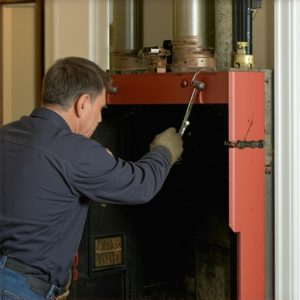
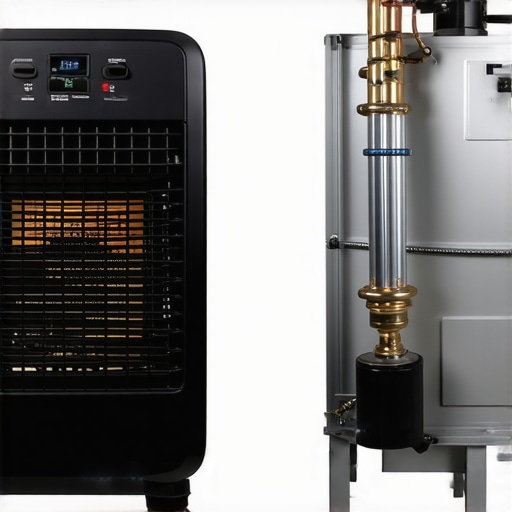
Let’s perform a mechanical autopsy on why that $200 shop heater from the big-box store is a ticking time bomb compared to a professional furnace. A shop heater is a crude device designed for sensible heat—it just throws fire at the air. A professional installation involves a complex dance of thermodynamics. When we talk about efficient hvac repairs, we are talking about maintaining the integrity of the heat exchanger—the ‘lungs’ of your home. In a professional furnace, the combustion process is sealed. The gas valve (the heart) sends ‘gas’ or ‘juice’ to the burners, where the flame is drawn into the heat exchanger. The blower then moves air over these hot surfaces without the air and the fire ever meeting. [IMAGE_PLACEHOLDER_1]
The North Climate Reality: The Hidden Killers
Up here in the cold zones, we aren’t just fighting the temperature; we are fighting chemistry. When you burn gas or oil, you produce water vapor and carbon dioxide. In a high-efficiency 90%+ AFUE furnace, we actually condense that vapor to grab the latent heat. This is why we use PVC venting. If you are running an old boiler or a cheap unvented heater, you are begging for a disaster. We often see homeowners in the Northeast needing a chimney liner installation because the acidic condensate from a newer, more efficient unit will eat through old masonry, leading to a structural collapse or, worse, carbon monoxide leaking into the bedroom. This is why furnace repair is urgent the moment you smell something ‘sour’ or ‘metallic’ near your vents.
The Math of the Breakdown: Repair vs. Replace
I’ve seen ‘Sales Techs’ try to condemn a perfectly good steam boiler because of a simple relay services issue. They see a 30-year-old cast iron beast and immediately quote $15,000 for a replacement. But here is the truth: those old steam systems, if maintained, can outlast us all. Steam boiler repair is a lost art. It’s about water chemistry and ‘skimming’ the boiler to remove oils that cause ‘priming’ (water surging into the pipes). However, if you are still burning oil, an oil to gas conversion is often the smartest move you can make. The ROI isn’t just in the lower fuel cost; it’s in the reduction of soot and the elimination of that massive tank in your basement that’s one pinhole leak away from an EPA nightmare.
‘All combustion-based heating systems must have adequate ventilation and combustion air to prevent backdrafting and hazardous gas accumulation.’ – ASHRAE Standard 62.1
The Airflow Manifesto: Why the ‘Tin Knocker’ Matters
You can have the most expensive biomass boiler or high-end furnace, but if your ‘Tin Knocker’ (duct guy) didn’t size the returns correctly, you’re throwing money out the window. High static pressure is the silent killer of blowers. It’s like trying to run a marathon while breathing through a cocktail straw. This is why duct cleaning services are only half the battle; you need to ensure the ducts are actually sealed with ‘Pookie’ (mastic), not just duct tape. Tape dries out and fails; Pookie is forever. If you’re noticing hot and cold spots, you don’t need a bigger heater; you need a smart thermostat setup and potentially a thermostat wiring upgrade to handle multi-stage equipment that can modulate the heat instead of just blasting it full-bore.
The Professional Edge: Beyond the Box
When we perform a professional installation, we aren’t just dropping a box in the basement. We are looking at the gas line installation for furnaces to ensure proper pressure—if the pressure drops when the water heater kicks on, your furnace will lock out or, worse, suffer from ‘lazy flames’ that soot up the heat exchanger. We look at biomass boiler services for rural clients who want off the grid, but even then, the physics of the chimney and the relay logic remain the same. HVAC maintenance plans aren’t a ‘scam’ if they include a combustion analysis. If a tech doesn’t pull out a digital analyzer to check your CO levels and O2 percentage, they aren’t a tech; they’re a parts changer. Check out these preventative hvac repair tips to see what a real maintenance check looks like. Don’t be the person using a shop heater to keep the pipes from freezing because you ignored a $300 repair in October. Physics doesn’t care about your budget, and the cold is a very patient hunter.