The Myth of the Heatless Winter
For thirty years, I’ve heard the same old wives’ tale from homeowners and greenhorn technicians alike: ‘Heat pumps don’t work below freezing.’ That was true back when we were installing clunky reciprocating compressors that sounded like a freight train and had the efficiency of a toaster oven. But the game has changed. If your system is struggling when the mercury dips, it’s not because the technology is flawed; it’s because you’re likely trying to run a ‘standard’ pump in a ‘hyper-heat’ environment. Understanding the cold climate heat pumps evolution is the difference between a cozy living room and a 24/7 heating emergency response call in the middle of a blizzard.
My old mentor, a grizzled tin knocker named ‘Sully’ who could sniff out a refrigerant leak from three blocks away, used to scream at me, ‘You can’t cool what you can’t touch, and you can’t heat what you can’t squeeze!’ He was obsessed with the physics of the ‘juice.’ He taught me that there is no such thing as ‘cold’—only an absence of heat. Even at 0°F, there is heat energy in the air. The trick is having a machine capable of extracting it. That’s where the technical fork in the road appears between standard inverter units and the modern hyper-heat behemoths.
“Equipment shall be sized to satisfy the calculated heating load at the heating design temperature, ensuring the balance point meets the climatic demands of the region.” – ACCA Manual S
The Thermodynamic Gap: Flash Injection vs. Standard Compression
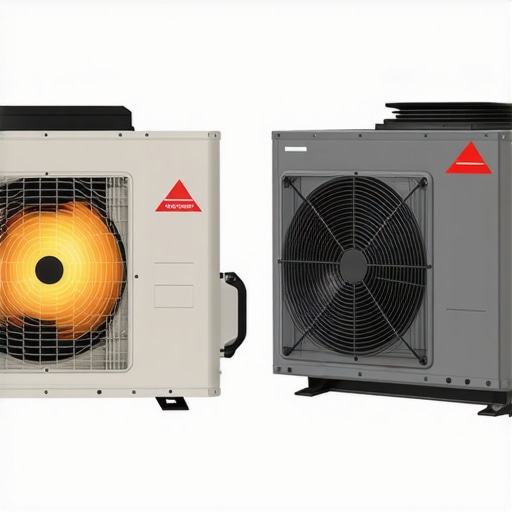
A standard heat pump operates on a fairly simple curve. As the outdoor temperature drops, the density of the refrigerant—the ‘gas’—decreases. When the air is thin and freezing, the compressor has to work twice as hard to move half the heat. By the time you hit 25°F, most standard units lose about 40% of their capacity. They start relying on ‘heat strips’ or ’emergency heat,’ which is basically an electric furnace that drains your bank account faster than a hole in a suction line. This is why many people look into financing for heat pump installs that actually handle the load.
Hyper-heat technology, or what we call ‘Vapor Injection,’ changes the cycle. Imagine a turbocharger on an engine. When the system senses the outdoor ambient temperature crashing, it injects a portion of the refrigerant back into the compressor at a mid-point in the compression stroke. This increases the mass flow rate without overheating the compressor. It allows the unit to maintain 100% of its heating capacity down to 5°F or even -13°F. [IMAGE_PLACEHOLDER] While a standard unit is gasping for air, the hyper-heat unit is performing a high-pressure dance, squeezing every latent BTU out of the sub-zero atmosphere. This is the gold standard for heating service innovations transforming 2025 climate control.
Airflow: The Silent Killer of Efficiency
I don’t care if you buy a $20,000 hyper-heat system; if your static pressure testing shows your ductwork is strangled, you’ve wasted your money. A ‘Sales Tech’ will sell you a shiny new box and walk away, but a real technician looks at the ‘Pookie’ (mastic) on the joints. If the return air drop is too small, the evaporator coil (which acts as a condenser in heat mode) will overshoot its pressure limits, causing the system to short cycle. This is why ac installation secrets always come back to the tin. You cannot move heat if you cannot move air.
In cold climates, we also have to worry about the ‘Polar Vortex’ effect on the physical unit. I’ve seen standard pumps turned into blocks of ice because the defrost board was calibrated for a temperate zone. Hyper-heat units often feature base pan heaters and sophisticated logic that prevents ice buildup on the fins. If you are dealing with a hybrid setup, you might even need chimney liner installation for your backup furnace to ensure proper drafting during those 2 AM cycles. Keeping the internals clean is just as vital; heat exchanger cleaning and combustion analysis on dual-fuel systems ensure that when the heat pump passes the baton to the gas furnace, it does so safely and efficiently. If you’re unsure about your current setup, check out how to identify when furnace repair is urgent.
“Low-ambient heat pump performance is governed by the compressor’s ability to maintain refrigerant mass flow despite low suction pressures.” – ASHRAE Fundamentals Handbook
The 2025 Regulatory Cliff: R-454B and Beyond
We are currently standing on a regulatory cliff. By 2025, the ‘juice’ we’ve used for years (R-410A) is being phased out for A2L refrigerants like R-454B. These are ‘mildly flammable,’ which means the new hyper-heat systems will come with sensors and leak-detection logic that didn’t exist five years ago. This makes ultimate guide to ac installation more relevant than ever. Buying a clearance-rack standard unit now might seem cheap, but finding parts or a ‘Sparky’ (electrician) who knows how to wire the new sensors in three years will be a nightmare.
Furthermore, cold dry air is a heat pump’s enemy in terms of comfort. This is why we almost always recommend whole-home humidifiers with any hyper-heat install. Without moisture, 72°F feels like 65°F because the sweat evaporates off your skin too fast. We also see more solar thermal heating integration being used to pre-heat the refrigerant loops, though that’s still the ‘fancy’ side of the trade. If you want to keep your system running through the next decade, follow top hvac repair strategies and don’t skip the annual commercial furnace repair or residential check-ups. Efficiency isn’t just a rating on a sticker; it’s a result of physics, maintenance, and not letting some ‘Sales Tech’ talk you into a unit that can’t handle a real winter.