The Sound of Silence in a Polar Vortex
My old mentor, a man who had more soot in his lungs than a Victorian chimney sweep, used to scream at me over the roar of a draft inducer motor: ‘You can’t cool what you can’t touch, and you can’t heat what you can’t prove!’ This wasn’t just a senile rant; it was the fundamental law of the millivolt. We were standing in a basement in the dead of a January freeze, looking at a boiler that had quit. The ‘Sales Tech’ who beat us there had already quoted the homeowner for a full system replacement, claiming the gas valve was shot and the heat exchanger was suspect. I looked at the flame. It was lazy, yellow, and dancing away from the sensor. It wasn’t a dead gas valve; it was a five-minute cleaning job. This is the reality of the trade. Understanding the difference between a dirty pilot and a dead thermocouple isn’t just about technical trivia—it is about the physics of safety and the ethics of service.
“The most expensive equipment in the world cannot overcome a bad duct system.” – Industry Axiom
The Mechanical Anatomy of a Flame
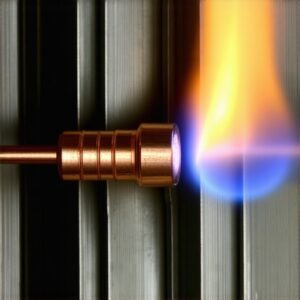
To understand why your furnace or boiler isn’t kicking on, we have to perform a forensic diagnosis on the pilot assembly. In the world of hydronic heating systems and traditional gas line installation for furnaces, the pilot light is the sentinel. It sits there, burning a tiny amount of ‘juice’ to ensure that when the main gas valve opens, there is a source of ignition. But the pilot doesn’t work alone. It lives in a symbiotic relationship with the thermocouple. This little copper rod is an elegant piece of physics. It uses the Seebeck effect: two dissimilar metals joined at the tip that generate a tiny electrical current—about 25 to 30 millivolts—when heated. If that current isn’t there, the ‘Sparky’ didn’t do anything wrong; the physics just failed. The gas valve won’t stay open because it thinks the house is about to fill with unburned gas. It’s a safety lock, plain and simple.
Dirty Pilot: The Suffocation of Efficiency
When I talk about a dirty pilot, I’m talking about carbon buildup and oxidation. Gas isn’t perfectly pure, and the air in your basement is full of dust and pet dander. Over time, the orifice of the pilot burner gets restricted. The flame loses its sharp, blue cone and becomes a flickering, yellow mess. A yellow flame is a cold flame. It lacks the concentrated thermal energy to keep the thermocouple tip at the proper temperature. This is where preventative maintenance contracts save homeowners thousands. A technician with a wire brush and a can of compressed air can restore that flame. If the pilot flame is lifting off the burner or ‘ghosting,’ you probably have an airflow issue or a draft problem. This is where airflow measurement services come into play. If the combustion air is restricted, the flame can’t breathe, and if the flame can’t breathe, the thermocouple won’t get hot enough to tell the gas valve everything is okay.
The Dead Thermocouple: When Physics Quits
Now, let’s talk about the thermocouple itself. This thing lives in a literal firestorm. It is subjected to constant thermal expansion and contraction. Eventually, the internal junction breaks down. If your pilot lights but goes out the second you release the knob, your thermocouple has likely ‘given up the ghost.’ It’s no longer producing those 30 millivolts. You can’t fix a dead thermocouple; you replace it. It’s a cheap part, but the labor of getting to it in a cramped, soot-filled boiler cabinet is where the ‘Tin Knockers’ and service techs earn their keep. This is a common point of failure in everything from biomass boiler services to standard natural gas setups. If you’re seeing frequent thermocouple failures, you might have a high head pressure issue or excessive heat in the combustion chamber, which are things we look for during boiler maintenance services.
“The technician shall verify that the combustion air supply is adequate for the appliance being serviced to prevent carbon monoxide accumulation.” – NFPA 54 / ANSI Z223.1
Thermodynamic Zooming: Heat Exchange in the Cold North
In a cold climate like the Northeast or Midwest, we aren’t just moving air; we are managing molecular energy. In hydronic heating systems, we use water as the medium. Water has a much higher specific heat capacity than air. When a boiler fires up, we are transferring sensible heat into the water. If the pilot is dirty, the whole sequence of operation is delayed, and the latent heat of the basement humidity can lead to corrosion on the external surfaces of the heat exchanger. This is why Energy Star heating certification is so important—it guarantees that the unit is designed to extract the maximum amount of energy from the fuel before it’s lost out the flue. If you’re running an older unit, you might be losing 40% of your heat to the sky. Transitioning to new construction heating design often involves moving toward 95% AFUE furnaces that use electronic ignition instead of a standing pilot, which eliminates this whole headache entirely.
The Trap: Repair vs. Replace
When do you pull the plug? If I’m looking at a 20-year-old furnace with a cracked heat exchanger and a dead thermocouple, I’m going to tell you it’s time to move on. A cracked heat exchanger is a death sentence; it leaks carbon monoxide into your breathing air. But if the unit is only ten years old and it just needs a $20 thermocouple and a pilot cleaning, anyone telling you to buy a new $8,000 system is a snake oil salesman. I’ve seen too many ‘Sales Techs’ prey on people who don’t know the difference between a minor ignition issue and a catastrophic failure. This is why furnace repair myths debunked by industry experts are so vital for homeowners to read. We also see a lot of folks trying to integrate air purification integration into old, failing systems. It’s like putting a HEPA filter on a coal plant—it doesn’t make sense if the core combustion isn’t right.
The Future of Control
We are moving into an era of app-controlled heating systems where your phone will tell you your flame signal is weak before you even feel the chill. These systems monitor the micro-amps of the flame sensor (the modern cousin of the thermocouple). If the sensor is dirty, the system sends an alert. It’s a far cry from the days of sticking a match into a dark furnace and hoping you don’t lose your eyebrows. Whether you are dealing with a standard gas line installation for furnaces or a complex biomass setup, the physics remains the same: fuel, oxygen, and heat. If any of those three are out of whack, you’re going to be cold. Make sure you’re checking your top hvac repair strategies to keep your system running through the next polar vortex. Comfort is physics, not magic. Don’t let a ‘Sales Tech’ tell you otherwise.”,”image”:{“imagePrompt”:”A macro shot of a blue pilot flame engulfing a copper thermocouple in a dark furnace interior”,”imageTitle”:”Furnace Pilot Light and Thermocouple”,”imageAlt”:”Close up of a furnace thermocouple being heated by a pilot flame”},”categoryId”:1,”postTime”:”2025-05-20″}