Listen, if your furnace sounds like a bag of marbles in a blender, you aren’t just looking at a noise problem; you’re looking at a static pressure catastrophe. I’ve spent thirty years crawling through joists and dragging my tool bag across frozen gravel, and if there is one thing I’ve learned, it is that the blower motor is the most abused component in your entire mechanical room. It is the heart of the system. Without it, your heat exchanger is just a glowing piece of metal waiting to crack, and your evaporator coil is just a block of ice waiting to flood your basement. Most homeowners—and frankly, most of these green ‘Sales Techs’ who couldn’t find a manifold if it hit them in the face—don’t understand that a noisy motor is a symptom of a deeper thermodynamic failure.
“The most expensive equipment in the world cannot overcome a bad duct system.” – Industry Axiom
My old mentor used to scream at me in the middle of a 10-degree January night, ‘You can’t heat what you can’t touch!’ He was talking about the boundary layer of air on a heat exchanger. This is why airflow matters more than raw horsepower. If that blower isn’t spinning at the exact RPM dictated by the manufacturer’s fan curve, your efficiency is dead in the water. We see this all the time in church heating systems where the massive duct runs were designed by a tin knocker who retired in 1974. If the static pressure is too high because of clogged filters or undersized returns, that motor is working against a wall of resistance. It starts to draw more amps, the windings get hot, and eventually, the bearings start to scream for mercy.
The Forensic Diagnosis: Decoding the Screech
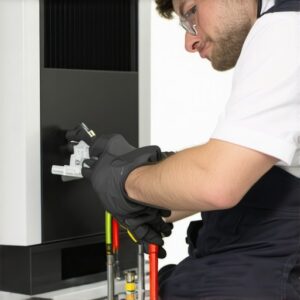
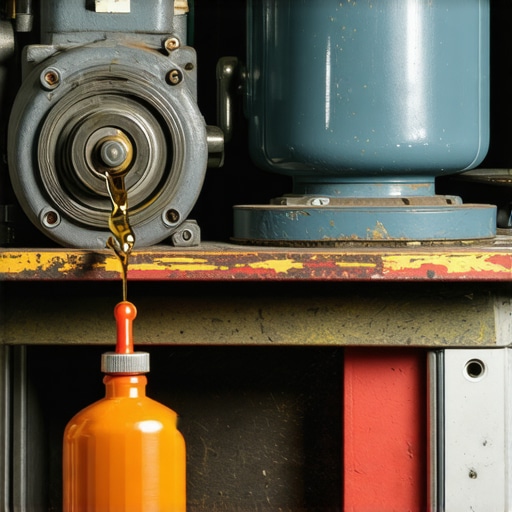
When I walk into a mechanical room and hear a motor acting up, I don’t just reach for my oiler. I reach for my multimeter and my manometer. You have to understand the Mechanical Anatomy of the blower assembly. You’ve got the motor itself, the capacitor (on older PSC motors), and the squirrel cage—the actual wheel that moves the air. If the sound is a high-pitched squeal, that’s almost always the bearings. In the old days, we had oil ports. You’d drop a little 20-weight non-detergent oil in there and buy yourself another three seasons. But modern SEER2 compliant upgrades often feature sealed bearings or ECM (Electronically Commutated Motors) that are ‘lubricated for life.’ When those fail, you aren’t oiling anything; you’re looking at a replacement.
If the sound is a heavy thumping or vibration, that isn’t the motor—that’s the squirrel cage out of balance. I’ve seen new construction heating design where the installers left a handful of screws or a roll of tape inside the cabinet. That debris gets sucked into the wheel, knocks a weight off, and now your furnace is trying to shake itself off the plenum. This is why HVAC duct sealing with pookie is so critical—not just for efficiency, but to keep the system sealed from the dust and construction debris that kills motors prematurely. You can find more about the long-term impact of these issues in our top HVAC repair strategies.
The Thermodynamics of the Northern Winter
In our neck of the woods, where we deal with polar vortexes and sub-zero humidity, the blower motor faces a unique enemy: the cracked heat exchanger. If your motor is failing and the airflow drops, the heat exchanger gets too hot. Steel expands. Then it cools and contracts. Do that enough times and you get a hairline fracture. Now you’ve got carbon monoxide leaking into the airstream. That’s why I’m a stickler for combustion analysis during every service call. If I see a motor struggling, I’m checking for flame rollout immediately. This isn’t a game; it’s physics. For those with older homes, a radiator replacement or dual fuel heat pump systems might be a safer bet than trying to limp a 25-year-old furnace along with a failing blower.
“Failure to provide adequate combustion air can result in incomplete combustion and the production of carbon monoxide.” – NFPA 54 / ANSI Z223.1
If you’re running propane conversion services in a rural area, the stakes are even higher. Propane is a dense, high-energy fuel. If your blower isn’t pulling that heat off the exchanger fast enough, you’re wasting gas and risking a catastrophic failure. I’ve seen evaporative cooler services in the summer lead to rusted blower housings because the humidifier installation was done wrong, or the swamp cooler wasn’t drained, sending moisture right into the cold-air return. Moisture and electrical windings are like cats and dogs; they don’t mix. Check out our guide on urgent furnace repairs to see if your noise is a red flag.
The Math: To Fix or To Toss?
The average PSC blower motor replacement might run you $500 to $800 depending on the horsepower and the labor involved. However, if you have a high-efficiency ECM motor, you might be looking at $1,500 just for the part. This is where the ‘Sales Techs’ start salivating. They’ll tell you the whole system is junk and try to sell you a $15,000 unit. Don’t fall for it. If your heat exchanger is clean and the unit is under 12 years old, replace the motor. If the unit is pushing 20, you’re using R-22 juice (which is priced like liquid gold now), and the blower is shot, it might be time for the ultimate guide to AC installation.
We have to look at the sensible heat vs. latent heat. In a cold climate, we are focused on sensible heat—raising the temperature. If the blower is weak, the air coming out of the vents might feel ‘hotter,’ but you aren’t moving enough volume to actually satisfy the thermostat. The unit runs longer, your electric bill spikes, and you’re wondering why the back bedroom is 62 degrees while the hallway is 75. Proper HVAC duct sealing and a healthy motor ensure that the ‘beer can cold’ suction line stays that way in summer and your dual fuel heat pump systems don’t freeze up in the winter. For more technical insights, read about efficient HVAC repairs.
Final Verdict from the Attic
Stop ignoring the noise. If it’s a hum, check the capacitor (the sparky might call it a ‘start cap’). If it’s a squeal, check for oil ports; if there are none, call a pro. And for the love of all that is holy, change your filters. A dirty filter is the number one killer of blower motors. It increases the static pressure, makes the motor work twice as hard, and burns out the bearings. If you’re unsure, reach out via our contact page. Remember, comfort is a matter of physics, not magic. You can’t cheat the fan laws, and you certainly can’t cheat a cold winter with a dead motor.