The Ghost in the Pipes: Why the Pressure Gauge Doesn’t Lie
The silence of a dead boiler at 3 AM is a specific kind of cold. It’s not just the temperature drop; it’s the sound of a system that has given up the ghost. I’ve spent thirty years dragging my tool bag through crawlspaces and onto frozen rooftops, and I can tell you that a boiler losing pressure isn’t a mystery—it’s physics. While some ‘Sales Tech’ might try to scare you into a $12,000 replacement the second they see a dropping needle, a real Tin Knocker or wet-head knows that the answer is usually hidden in the thermal expansion cycles. If you are waking up to a ‘low pressure’ lockout, you aren’t just losing water; you’re losing the battle against thermodynamics.
My old mentor, a man who could smell a cracked heat exchanger from the driveway, used to scream at me, ‘You can’t move what you can’t contain!’ He was talking about new construction heating design, but the logic applies to every hydronic loop in existence. He’d grab a copper pipe and remind me that airflow and fluid pressure are two sides of the same coin. This is why I tell people that if your system is failing, you need a diagnosis, not a sales pitch. You can check out how to identify when furnace repair is urgent and why to see the parallels between forced air and hydronic failures.
“The most expensive equipment in the world cannot overcome a bad duct system—or a poorly balanced hydronic loop.” – Industry Axiom
The Forensic Diagnosis: The Anatomy of a Pressure Drop
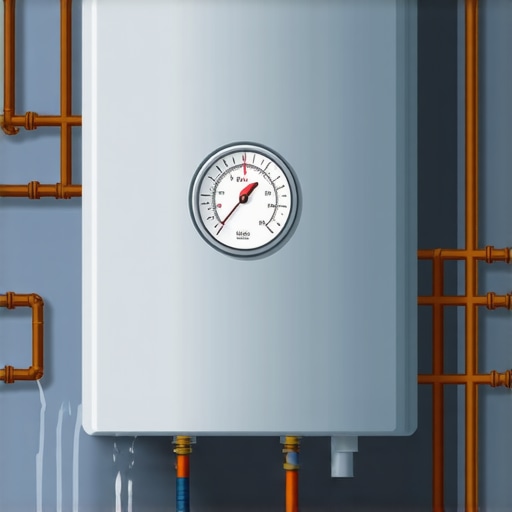
To understand why your boiler is failing, you have to look at it like a living organism. Your expansion tank is the lung. Your pump is the heart. And the water? That’s the blood carrying the sensible heat. When the sun goes down and the CLIMATE ZONE (North/Cold) temperatures plummet, your system works harder. But as soon as it satisfies the thermostat and shuts off, the water cools. Cold water occupies less volume than hot water. If your expansion tank—that little gray or red tank hanging off the pipe—is waterlogged, it can’t compensate for this contraction. The pressure drops, the low-water cutoff switch trips, and you wake up shivering.
I’ve seen this a thousand times during gas furnace repair calls that turned into boiler rescues. A homeowner thinks they need a blower motor replacement or some complex wiring repair for heating systems, but it’s actually just a $200 expansion tank that lost its air charge. When the diaphragm inside that tank fails, there’s no room for the ‘juice’ to expand. The pressure relief valve (PRV) spits out the excess water during the heat cycle (you might not even see it if it’s piped into a drain), and then, when the system cools at night, there isn’t enough water left to maintain the 12-15 PSI required to reach the second floor.
The Math of the Mechanical: Repair or Replace?
Is it time to pull the plug? If you’re dealing with a cast iron sectional boiler from the 1970s, you’re looking at an AFUE (Annual Fuel Utilization Efficiency) rating that’s probably hovering around 60%. Modern new construction heating design calls for 95% or higher. However, I’ve saved plenty of ‘dead’ units with a simple wiring repair for heating systems or by fixing a slow leak at a radiator valve. If you’re seeing predictive maintenance alerts on a high-efficiency mod-con boiler, ignore them at your peril. These modern machines are like Ferraris; they don’t tolerate ‘Pookie’ (mastic) fixes or ‘Sparky’ (electrician) shortcuts. They need precision. If the heat exchanger is leaking, you’ll smell that unmistakable metallic, slightly sweet scent of glycol or the acidic rot of combustion byproducts. That’s when the $500 repair becomes a $8,000 replacement conversation.
“Design of hydronic systems must account for the density variations of water across the full operating temperature range to prevent mechanical fatigue.” – ASHRAE Fundamentals
If you’re considering an upgrade, don’t just think about the boiler. Think about the whole envelope. AC installation and humidifier installation are often overlooked components of total home comfort. Even duct cleaning services play a role in how heat is distributed if you have a hybrid system. For those looking to maximize their current setup, I’ve written about heating service hacks for comfort and savings in 2025 which covers the small tweaks that save big on the gas bill.
The Silent Killer: Pinholes and Thermal Stress
In the North, where the polar vortex likes to sit on our chests every February, thermal stress is the number one killer of boilers. Every night, the metal expands and contracts. This ‘breathing’ can open up pinhole leaks in the heat exchanger that only leak when the metal is hot and the pores are open. By the time you wake up and the system is cold, the leak has ‘sealed’ itself, leaving you wondering where the pressure went. This is a dangerous game. If the leak is internal, you’re potentially putting moisture into the combustion chamber, which leads to carbon monoxide risks and flame rollout. This isn’t like a pellet stove repair where you just clean the burn pot; this is high-stakes hydronics. If you need a pro to look at it, check our contact us page before the next cold snap hits.
Preventive Maintenance vs. The Scam Tune-Up
Avoid the ‘Sales Tech’ who comes in with a clean shirt and a clipboard but no combustion analyzer. A real tune-up involves checking the pH of the system water, testing the expansion tank’s pre-charge, and ensuring the blower motor replacement (if it’s a power-vented unit) isn’t imminent. We look for signs of ‘weeping’ at every joint. Whether it’s restaurant kitchen exhaust repair or a simple residential boiler, the physics of pressure remain the same. You can find more top hvac repair strategies to extend your systems life on our blog. Remember, comfort is a matter of physics, not magic. Don’t let a small pressure drop turn into a flooded basement or a frozen pipe disaster.