The Invisible Threat in Your Mechanical Room
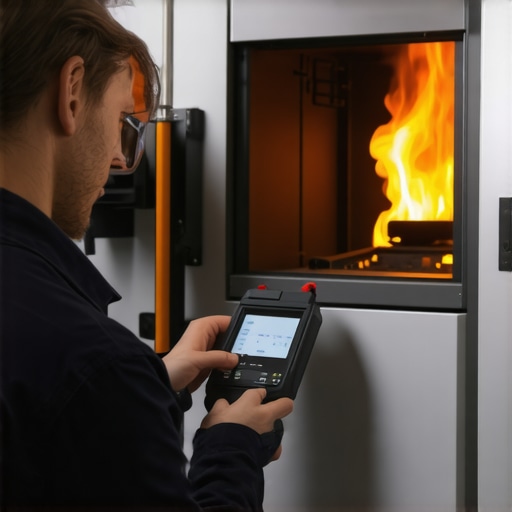
I’ve spent over thirty years in this trade, most of it with my head inside a furnace cabinet or balanced on a narrow joist in a freezing attic. In that time, I’ve learned one immutable truth that my old mentor hammered into my skull every morning: ‘You can’t cool what you can’t touch, and you can’t fix what you haven’t measured.’ He’d scream this while watching me try to eyeball a pilot light. The point he was making—the one that most ‘Sales Techs’ in their shiny, un-stained uniforms forget—is that physics doesn’t care about your intuition. When it comes to furnace tune-up services, if you aren’t using a calibrated combustion analyzer, you aren’t a technician; you’re a gambler playing with the homeowner’s life. In the frozen climates of the North, where we push these machines to their absolute limits for six months straight, ‘looking’ at a flame is about as scientific as reading tea leaves.
“The most expensive equipment in the world cannot overcome a bad duct system, nor can a visual inspection guarantee the integrity of a combustion chamber.” — Industry Axiom
The Anatomy of a Forensic Diagnosis
When I walk up to a unit that’s locking out, I’m not looking for a quick fix to hit a commission. I’m performing a forensic autopsy. A furnace is a controlled explosion inside a metal box. To ensure that explosion stays ‘controlled,’ we have to look at the chemistry of the flue gases. This is where control board diagnostics come into play, but they only tell half the story. The board might throw a code for a pressure switch, but it won’t tell you that your heat exchanger has a hairline fracture that only opens up when the metal reaches 400 degrees. That’s why identifying when furnace repair is urgent often comes down to the ppm (parts per million) of Carbon Monoxide (CO) detected in the exhaust stream. If I see CO levels spiking, I don’t care how blue that flame looks—there is an oxygen-to-fuel ratio problem, or worse, a breach in the heat exchanger.
Thermodynamic Zooming: The Chemistry of the Burn
Let’s get technical. A furnace works on the principle of stoichiometry—the ideal ratio of air to fuel. If you have too much air, you’re wasting heat up the chimney. Too little air, and you get ‘incomplete combustion,’ which produces that acrid, sour-smelling soot and deadly CO. During a proper furnace tune-up services visit, we check the ‘Oxygen’ and ‘Stack Temp.’ If the stack temp is too high, your blower motor replacement might be next on the list because the air isn’t moving across the heat exchanger fast enough to pull the heat away. The metal gets brittle. It cracks. It’s a domino effect. This is why we also push for carbon monoxide detector installation in every home; it’s the last line of defense when the mechanicals fail. Whether you have an old-school natural draft unit or a high-efficiency 96% AFUE beast, the physics of the heat exchange remain the same: you must manage the latent heat without allowing the acidic condensate to eat through your ‘Pookie’ (mastic) sealed joints or the secondary coil.
“Combustion analysis is the only method to determine if a furnace is operating safely and efficiently under actual field conditions.” — National Comfort Institute Standard
Beyond the Furnace: Boilers and Multi-Family Upgrades
In this industry, we don’t just deal with forced air. Boiler repair services require an even deeper understanding of pressure and heat transfer. If you’re managing a complex system or looking into multi-family heating upgrades, you aren’t just dealing with one thermostat; you’re dealing with a hydronic balance that can be thrown off by a single bad zone valve. I’ve seen electric heater services and even spa heater services fail because some ‘Sparky’ (electrician) didn’t understand the amperage draw on a cold start. Every piece of equipment, from the blower motor replacement in a residential split to the massive burners in a commercial boiler, needs a technician who understands that the ‘gas’ (refrigerant or fuel) is only as good as the vessel it’s contained in. If you’re tired of the runaround, you should see how furnace repair myths are debunked by industry experts who actually carry a manometer and a combustion analyzer.
Modern Upgrades: The 2025 Standard
We are moving into an era of thermostat wiring upgrades where your phone tells you the static pressure of your system. But all that tech is useless if your duct cleaning services were skipped for a decade and your return air is choked. Airflow is the lifeblood of the system. If the ‘Tin Knocker’ (duct guy) didn’t size the returns correctly, your brand-new furnace will die a premature death from high-limit tripping. We also see a rise in electric heater services as backup heat for heat pumps in the North. Even these require rigorous checking of the sequencers and heat strips. If you want to keep your family safe and your utility bills from looking like a mortgage payment, you need to understand heating service hacks for comfort and savings in 2025. It’s not about buying the flashiest unit; it’s about ensuring the unit you have is tuned to the specific atmospheric conditions of your home.
When to Pull the Plug: Repair vs. Replace
I tell folks all the time: I can fix anything, but I can’t fix stupid and I can’t fix ‘worn out.’ If your heat exchanger is breached, the unit is a ‘red tag’—it’s done. No amount of control board diagnostics will save it. Many homeowners try to limp along, but the risk of CO poisoning isn’t worth the $500 ‘bandage’ repair. We focus on top hvac repair strategies to get the most out of your current setup, but a true professional will tell you when it’s time to move on to a safer, more efficient model. Whether it’s a simple carbon monoxide detector installation or a full-scale system overhaul, the goal is always the same: a safe, breathable, and warm environment. Don’t let a ‘Sales Tech’ talk you into a unit you don’t need, and don’t let a ‘trunk-slammer’ leave your house without a printed combustion report showing that your furnace isn’t a ticking time bomb. Comfort is physics, and physics requires proof.