The Sound of a Silent Killer: Why Your Furnace Isn’t Just ‘Dirty’
The middle of January in a frost-locked city doesn’t care about your weekend plans. When the thermostat clicks and the only response is a hollow silence, followed by the frantic clicking of a relay that won’t engage, you aren’t just looking at a minor inconvenience. You’re looking at a failure in the most critical organ of your home’s respiratory system. Many homeowners think a quick spray of compressed air or a reach-in with a shop vac constitutes ‘cleaning’ the heat exchanger. They’re wrong. As a tech who has spent three decades diagnosing control board diagnostics and pulling cracked heat exchangers out of cramped crawlspaces, I can tell you: what you can’t see will either kill your efficiency or, in the worst-case scenario, kill you.
My old mentor used to scream at me during my apprenticeship, ‘You can’t heat what you can’t touch!’ This was his way of explaining the physics of boundary layers. In the HVAC world, airflow is the absolute monarch. If your heat exchanger is coated in a microscopic layer of soot or oxidation, the thermal transfer is throttled. You’re burning gas (the ‘juice’ of the heating world) but that heat isn’t reaching your living room; it’s going straight up the flue. This is why annual heating inspection protocols are not a suggestion—they are a thermodynamic necessity.
“The most expensive equipment in the world cannot overcome a bad duct system or a fouled heat transfer surface.” – Industry Axiom
Thermodynamic Zooming: The Physics of the Heat Exchange
To understand why a DIY attempt fails, we have to look at the metallurgy. Your furnace’s heat exchanger is a series of tubes or plates designed to separate poisonous combustion gases from the air you breathe while allowing heat to pass through the metal walls. In a high-efficiency 90%+ AFUE furnace, we also deal with secondary heat exchangers where latent heat is recovered. This is where furnace repair gets technical. When the temperature of the flue gas drops below the dew point, it turns into acidic condensate. If your drainage is backed up or the secondary coil is clogged with ‘gunk,’ the system will trip a pressure switch and lock you out. A DIYer with a vacuum cannot reach these tight serpentine bends where the real blockages happen.
In warehouse heating solutions, the scale is even larger. We’re talking about massive unit heaters or rooftop units where a fouled exchanger doesn’t just mean a cold office—it means thousands of dollars in wasted energy. Whether it’s a standard residential split or a complex steam boiler repair, the principle remains: soot is an insulator. Just 1/16th of an inch of soot can reduce heat transfer by up to 26%. That is money literally evaporating because you didn’t want to call a professional for duct cleaning services or a deep combustion chamber scrub.
The Forensic Diagnosis: More Than Just a Brush
When I walk up to a unit, I’m not just looking for dust. I’m performing a forensic analysis. I start with the flame. Is it a crisp, steady blue, or is it a lazy, flickering yellow? A yellow flame indicates incomplete combustion, likely caused by a clogged burner orifice or a failing pilot light relighting mechanism that isn’t sensing correctly. If I see ‘flame rollout’—where the fire reaches out toward the cabinet—I know the heat exchanger is likely cracked, creating a pressure imbalance. This is a red-alert situation that most DIYers miss until the carbon monoxide detector starts screaming.
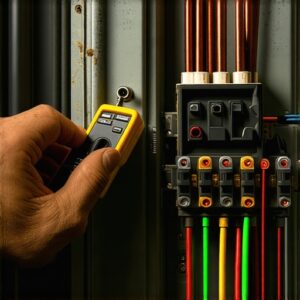
Modern systems require control board diagnostics that go beyond a simple multimeter. We use digital combustion analyzers to measure the ‘CO air-free’ levels. If you’re trying to save a buck by skipping a pro, you’re missing the chance to catch a failing inducer motor or a sticking gas valve before they leave you stranded. We also see many people trying to integrate voice control setup Alexa Google into their systems, thinking a ‘smart’ thermostat fixes a ‘dumb’ mechanical problem. If your heat exchanger is fouled, no amount of AI can make that metal transfer heat more efficiently. It’s like putting a racing steering wheel on a car with a blown head gasket.
“Unvented combustion products are a primary source of indoor air contaminants and must be strictly controlled through proper venting and heat exchanger integrity.” – ASHRAE Standards
The Danger of the DIY ‘Quick Fix’
I’ve followed enough ‘Sales Techs’ and DIY disasters to know that a ‘quick clean’ often leads to a long-term failure. I once saw a homeowner try to clean his heat exchanger with a wire brush and a garden hose. He ended up saturating the hot water heater repair sensors nearby and shorting out the main control board. A $200 cleaning turned into a $2,000 repair job. Professional cleaning involves pulling the blower assembly (the ‘tin knocker’s’ nightmare) to access the underside of the exchanger, using specialized chemicals that break down carbon without corroding the aluminized steel, and checking the static pressure. For those with steam humidifiers, we also have to ensure that the added moisture isn’t contributing to premature rusting of the heat exchange surfaces.
If you’re in the North, you know the ‘Polar Vortex’ is your biggest enemy. High head pressure in heat pumps or cracked exchangers in furnaces are common when the temp hits -10°F. If you want to avoid a 2 AM emergency call, you need to understand how to identify when furnace repair is urgent and why. Often, the ‘cleaning’ isn’t just about dirt; it’s about checking the structural integrity of the metal itself. Metal expands and contracts every time the furnace cycles. Over fifteen years, those thousands of ‘heat-cool’ cycles create stress fractures. A professional uses a borescope—a camera on a snake—to look inside the dark corners of the exchanger for those tiny cracks that leak CO.
Repair vs. Replace: The Financial Reality
When do you pull the plug? If I find a crack in a heat exchanger on a unit that’s 15 years old, I’m going to tell you to replace it. Why? Because the part alone is $800, and the labor to tear the furnace down to the frame is another $1,000. At that point, you’re halfway to a new, high-efficiency unit that comes with a warranty. We’ve debunked many furnace repair myths debunked by industry experts, and the biggest one is that you can ‘patch’ a heat exchanger. You can’t. It’s a sealed system under thermal stress; any weld will fail, and it’s a massive liability.
For those looking to save money, focus on heating service hacks for comfort and savings in 2025, such as sealing your ducts with ‘pookie’ (mastic) and ensuring your return air drops are sized correctly. Airflow is king. If the ‘sparky’ (electrician) did his job right and the unit is getting clean power, and your ductwork isn’t restricted, a clean heat exchanger will keep your house toasty for decades. Don’t gamble with a DIY attempt when it comes to the safety of your family and the efficiency of your home. Get a pro who knows how to read the ‘gas’ and the ‘air’ like a roadmap.