The Forensic Diagnosis of a Dead Signal
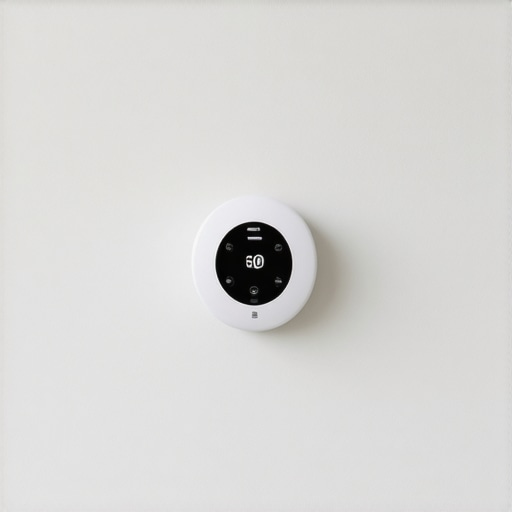
I followed a ‘Sales Tech’ last Tuesday who quoted a sweet old lady fifteen thousand dollars for a complete system overhaul because her new ‘smart’ thermostat kept dropping the connection. He told her the furnace was ‘obsolete’ and ‘incompatible with modern logic.’ I walked in, saw the three-inch thick horsehair plaster walls, and knew exactly what was happening. It wasn’t the furnace; it was the physics of a Faraday cage. People think HVAC is just about blowing air, but it’s about control, and you can’t control what you can’t communicate with. That lady didn’t need a new system; she needed a tech who understood that wire lath—the metal mesh behind that old plaster—is basically a signal-killing blanket. I did a simple thermostat wiring upgrades job, added a dedicated C-wire, and moved her bridge. Total cost? A fraction of that scam artist’s quote. This is the reality of ‘modern’ tech hitting the wall of old-school construction. If you’re dealing with a system that won’t respond, you need to understand the mechanical anatomy before you start cutting checks for new equipment.
“The most expensive equipment in the world cannot overcome a bad duct system.” – Industry Axiom
The Physics of the Plaster Barrier
In the trade, we call the duct guys ‘Tin Knockers’ for a reason, but in these old Northern homes, the walls themselves are the enemy. When we talk about AI-driven HVAC optimization, everyone gets excited about the software, but they forget the hardware. Thick plaster walls, often reinforced with wire lath or even old-school wood slats, have a high dielectric constant and physical density that laughs at a 2.4GHz WiFi signal. This is why your heat pump installation might be top-of-the-line, but the unit short cycles because the thermostat loses its mind every time the microwave turns on. When we perform manual J calculations, we aren’t just looking at the windows; we’re looking at the thermal mass of those walls. Plaster holds heat longer than drywall. If your thermostat is mounted on a cold exterior-facing plaster wall without a proper insulated backing, it’s going to lie to the control board. You’ll have the burner running while the room is already at setpoint, leading to a cracked heat exchanger or a premature need for furnace flame sensor cleaning because of the constant cycling. For more on managing these old systems, check out heating service hacks for comfort and savings in 2025.
Thermodynamic Zooming: Latent Heat and the Plaster Envelope
Let’s talk about the science they don’t teach the sales guys. We don’t just cool air; we remove energy. In a house with thick plaster, you have a massive amount of sensible heat stored in the structure itself. If you install an oversized unit—which is what happens when amateurs skip the manual J calculations—the air temperature drops fast, the thermostat hits its target, and the compressor shuts off. But the plaster is still radiating heat. Even worse, in humid climates, the unit didn’t run long enough to hit the dew point on the evaporator coil. You haven’t removed the latent heat. Now you have a ‘cold swamp’—70 degrees but 70% humidity. This is where geothermal heat pump systems or variable-speed units shine, as they can modulate to handle that steady radiant load from the plaster without the ‘bang-bang’ control of an old-school wall furnace installation. If your system is struggling, it might not be the Juice (refrigerant) level; it might be that your system is sized for a cardboard box while you’re living in a brick oven. Proper refrigerant leak detection is vital, but so is understanding how your house breathes.
The C-Wire Crisis and Contactor Chatter
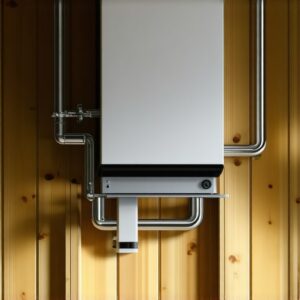
Most of these old houses were wired by a ‘Sparky’ who hasn’t seen a low-voltage transformer since the Nixon administration. Modern WiFi thermostats need constant power—the ‘Common’ wire. In an old wall furnace installation or a 1970s boiler setup, you usually only have two wires. DIYers try to use ‘power stealing’ thermostats that pulse the contactor to get a bit of gas (power) to the battery. This is a recipe for disaster. It causes contactor repair issues because the coil is constantly chattering, which can eventually burn out the transformer or even the control board. If you’re upgrading, you need real thermostat wiring upgrades. Don’t trust the ‘add-a-wire’ kits if you have the option to pull fresh 18/8 thermostat wire. While you’re at it, you should look into biomass boiler services if you’re in a rural area, as they offer a stable thermal profile that plaster walls love. If your system is acting up, don’t assume the worst. Learn how to identify when furnace repair is urgent and why before you let a tech talk you into a $20,000 replacement.
“Standard 62.1-2022: Ventilation for Acceptable Indoor Air Quality requires specific airflow rates that many residential ‘smart’ controls fail to maintain under high static pressure conditions.” – ASHRAE Standards
The Math: Repairing the Old vs. Installing the New
Is your system worth saving? If you’re looking at a 15-year-old R-410A unit with a pitted contactor and a dirty flame sensor, a simple contactor repair and furnace flame sensor cleaning will get you through the season for a few hundred bucks. But if you have a refrigerant leak detection test that shows a porous evaporator coil, you’re throwing ‘juice’ down a bottomless pit. In 2025, the industry is shifting to A2L refrigerants, and the cost of the old gas is going to the moon. This is when you consider heat pump installation or even geothermal heat pump systems to take advantage of tax credits. But remember: if you don’t fix the airflow and the control signal issues caused by your plaster walls, even the fanciest AI-driven HVAC optimization won’t save you money. You’ll just have a very expensive, very smart paperweight. For those looking to extend the life of their current setup, I recommend reading top hvac repair strategies to extend your systems life. Maintenance isn’t a suggestion; it’s the only way to beat the physics of a house that was built before the invention of the microchip. Keep your coils washed, your filters changed, and don’t let a ‘Sales Tech’ sell you a solution to a problem that can be fixed with a better WiFi access point and a bit of Pookie on the duct seams.