The Sound of Silence: A Forensic Diagnosis of a Cold House
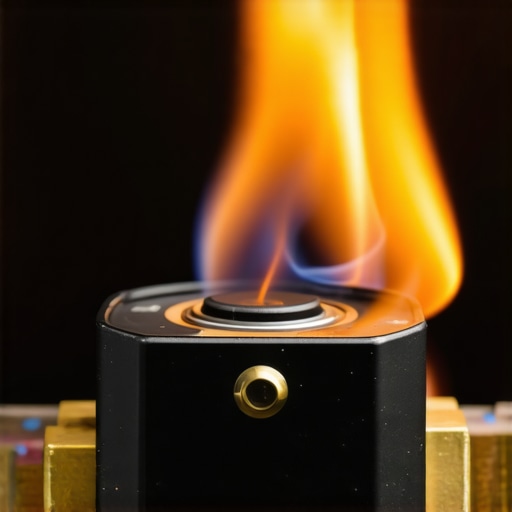
It is 2 AM on a Tuesday in the dead of January. The mercury has plummeted well below zero, and the wind is howling against the siding like a pack of wolves. You are jolted awake not by a noise, but by the lack of one. The house feels thin. You walk to the thermostat; it says 62 degrees despite being set to 70. You head to the basement or the utility closet, and you see the sequence start. The inducer motor whirs to life, venting the combustion chamber. Then, through the small mica viewport, you see it: a dull orange glow that intensifies into a brilliant, sun-like radiance. You wait for the ‘whoosh’ of the burners igniting. You wait for the warmth. But instead, you hear a faint click, the glow fades back into darkness, and the cycle repeats three times before the system goes into a hard lockout. You have a glow, but no fire. As a technician who has spent three decades sniffing out gas leaks and diagnosing ‘ghosts’ in the machine, I can tell you: this is where the physics of the system meets the paranoia of the control board.
The Physics Lesson: You Can’t Heat What You Can’t Touch
My old mentor used to scream at me while we were wedged into a freezing crawlspace, ‘You can’t cool what you can’t touch!’ While he was usually ranting about airflow over a frozen evaporator coil, the principle is the bedrock of all thermodynamics. In the context of your furnace, if the gas doesn’t ‘touch’ the igniter at the exact right millisecond, or if the flame doesn’t ‘touch’ the sensor with the right electrical signature, the system shuts down to prevent your house from becoming a bomb. This isn’t magic; it’s a series of safety gates. When your igniter glows but nothing happens, one of those gates is locked shut. Whether you are dealing with standard residential units or complex shop heater services, the sequence of operations is your roadmap to the truth. If you are struggling with a system that refuses to kick over, knowing how to identify when furnace repair is urgent and why can save you from a catastrophic pipe burst during a polar vortex.
‘Equipment must be sized to provide the capacity required to maintain the indoor design conditions at the outdoor design conditions, and the sequence of operation must prioritize safety over comfort.’ – ASHRAE Standard 90.1
The Anatomy of a Failed Ignition
To understand why the glow doesn’t lead to fire, we have to look at the ‘Mechanical Anatomy’ of the furnace. Think of the control board as the brain, the igniter as the match, and the gas valve as the heart. In a North/Cold climate zone, these components are pushed to their limit. 1. The Pressure Switch (The Gatekeeper): Even if the igniter glows, if the pressure switch isn’t proving that the ‘Tin Knocker’ did their job with the venting, the gas valve will never open. A tiny bit of ice in the secondary heat exchanger’s drain line or a bird’s nest in the flue can create just enough backpressure to trip the switch. 2. The Hot Surface Igniter (The Match): These are often made of silicon carbide or silicon nitride. They work on resistance. Just because it glows doesn’t mean it’s hot enough. As they age, their resistance increases (Ohms). A ‘lazy’ igniter might glow orange but fail to reach the 2,500°F required to combust the gas. This is a common point of failure that leads to unnecessary contactor repair or board replacements by ‘Sales Techs’ who don’t know how to use a multimeter. 3. The Gas Valve (The Heart): If the board sends 24 volts to the gas valve and you hear that click but no gas flows, the solenoid inside the valve has likely failed. In older systems, this might be a pilot light relighting issue, but in modern high-efficiency units, the valve is a precision instrument that can be gummed up by ‘black iron’ pipe scale or moisture in the line.
The Mystery of Flame Rectification
The most common culprit, however, is a process called flame rectification. After the gas ignites, the furnace must ‘know’ the flame is there within about 4 to 7 seconds. It doesn’t use a camera; it uses a flame sensor—a simple stainless steel rod. The furnace sends an AC current to the rod, and the flame itself acts as a diode, ‘rectifying’ the AC current into a tiny DC microamp signal that flows back to the ground. If that rod is dirty—covered in a microscopic layer of silica or carbon—the ‘brain’ thinks there is no fire and shuts off the gas to prevent a buildup of raw juice (gas) in your home. Many people think they need a whole new system, but often it is just a five-minute cleaning. Don’t be fooled by myths; read up on furnace repair myths debunked by industry experts before you sign a contract for a $15,000 replacement.
‘The heat exchanger must be inspected for cracks or holes, as these can allow combustion products to enter the airstream, regardless of ignition success.’ – ACCA Standard 4
Advanced Systems and Modern Solutions
In the modern era, we are seeing a shift toward AI-driven HVAC optimization and smart building management. These systems can actually predict a failing igniter by measuring the amperage draw over time. If you are tired of the combustion headache, many homeowners in colder climates are looking into heat pump installation—specifically cold-climate models—or geothermal heat pump systems. These eliminate the ‘glow but no fire’ problem entirely because there is no combustion. They move heat rather than creating it. For those with large estates, zoning system installation and hydronic heating systems provide a level of comfort that a standard forced-air furnace can’t touch. But regardless of the tech, whether it involves refrigerant leak detection for a summer AC issue or a winter furnace fail, maintenance is the only way to avoid the ’emergency’ call. I always tell my clients that preventative HVAC repair tips for year-round efficiency are worth their weight in gold when the temperature hits negative digits.
The Repair vs. Replace Math
When your igniter is glowing but the burner is dead, you’re looking at a repair bill that could range from $150 for a sensor cleaning to $600 for a premium gas valve. If your furnace is over 15 years old and you’re starting to see contactor repair needs or cracked heat exchangers, you’re throwing good money after bad. We are entering a new era of regulations in 2025, and heating service innovations transforming 2025 climate control are making older units look like dinosaurs. If you have any doubts about your system’s heartbeat, don’t wait for the lockout. If you need a pro who knows the difference between a real fix and a sales pitch, you can always contact us to get a straight answer. Remember: comfort is physics, not magic. Keep your filters clean, keep your vents clear, and don’t let a ‘Sales Tech’ talk you into a new unit when all you need is a little bit of sandpaper on a flame sensor.