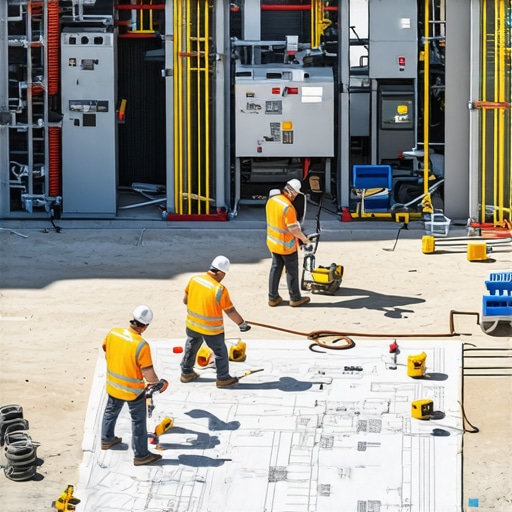
Listen, I’ve spent thirty years melting in attics and losing feeling in my fingers on frozen rooftops, and if there is one thing I’ve learned, it’s this: a shiny new house doesn’t mean a damn thing if the HVAC system was designed by a spreadsheet instead of a technician. Most people walk into a new construction home, see the fancy kitchen, and assume the heating is top-notch because it’s ‘new.’ But as someone who has spent decades fixing what the ‘lowest bidder’ installed, I can tell you that most new construction heating designs are missing the fundamental physics required to keep you comfortable for the long haul. Most ‘Sales Techs’—those guys in clean uniforms who couldn’t find a cracked heat exchanger if it hit them in the face—will tell you to just buy a bigger unit. They’re lying. Airflow is king, and if your ductwork is garbage, the most expensive furnace in the world is just a very heavy paperweight.
The Physics Lesson: Why Horsepower is Useless Without Lungs
My old mentor, a guy who smelled like burnt ozone and cheap coffee, used to scream at me, ‘You can’t cool what you can’t touch!’ He was talking about heat transfer, the literal soul of HVAC. Whether it’s industrial heater services or a residential split system, the physics don’t change. You are moving BTUs from one place to another. In the winter, you’re trying to saturate the air with sensible heat, but if your design is missing the proper return paths, that heat just piles up at the furnace and trips the high-limit switch. I remember a job in a million-dollar ‘smart home’ where the owner was freezing. The ‘Sparky’ had wired the smart thermostat setup correctly, but the tin knockers had installed a 12-inch return for a 4-ton system. The furnace was literally gasping for air. It was like trying to breathe through a cocktail straw while running a marathon. No amount of thermostat wiring upgrades will fix a vacuum in the return plenum. You have to understand static pressure testing; it’s the blood pressure of your home. If it’s too high, your blower motor is going to have a stroke within three years.
“The most expensive equipment in the world cannot overcome a bad duct system.” – Industry Axiom
1. The Absence of True Static Pressure Testing
In 90% of new builds, the installers never even pull out a manometer. They just slap the ‘Pookie’ (that’s mastic for you civilians) on the joints and call it a day. Static pressure testing is the only way to know if your heating design actually works. We’re looking at Total External Static Pressure (TESP). If your ductwork is too restrictive, the air velocity drops, but the friction increases. This means the heat exchanger in your furnace gets too hot because the air isn’t moving fast enough to carry the heat away. This leads to premature metal fatigue. You’re basically baking your furnace from the inside out. For a system to last, the duct design must account for the resistance of the filter, the evaporator coil, and the registers. Without this data, your ‘new’ system is on a fast track to a compressor burnout or a cracked exchanger. If you want to avoid a premature call for urgent furnace repair, make sure your tech actually measures the TESP.
2. Sophisticated Zoning for Human Comfort, Not Just Square Footage
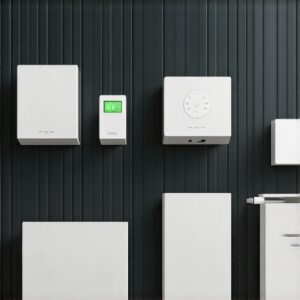
Most residential designs use a ‘one-size-fits-all’ approach, but if you look at hospital HVAC zoning, you’ll see how it’s actually supposed to be done. In a hospital, every room is treated as its own micro-climate to prevent the spread of pathogens and maintain precise temperatures. Your home needs a version of this. New construction often misses the mark by not including a bypass damper or modulated zone dampers. If your bedroom is at the end of a long, uninsulated run and the thermostat is in the hallway, you’re going to be miserable. Proper zoning requires more than just a smart thermostat setup; it requires a control board that can talk to the furnace’s variable-speed motor to reduce the ‘gas’ (refrigerant or fuel flow) when only one room needs heat. Without this, the system short-cycles, which is the fastest way to kill a capacitor and wear out your contactors.
3. Flue Pipe Installation and Combustion Physics
In the North, where the polar vortex likes to park itself, flue pipe installation is a matter of life and death, not just efficiency. New high-efficiency furnaces (90% AFUE and up) produce acidic condensate. If the flue pipe isn’t pitched back toward the furnace at exactly 1/4 inch per foot, that water traps in the pipe. On a 10°F night, that water freezes, blocks the vent, and your furnace shuts down—or worse, starts leaking carbon monoxide if the pressure switch fails. I’ve seen ‘professionals’ use the wrong schedule of PVC or fail to account for the ‘Equivalent Length’ of the vent, causing the inducer motor to work double time. This isn’t just about ‘making it fit’; it’s about the stoichiometry of combustion. If you don’t have enough makeup air, the flame rolls out and melts your wiring. If you’re seeing signs of this, you need to check out efficient HVAC repairs before the whole board fries.
“Standard 62.2 defines the roles of and minimum requirements for mechanical and natural ventilation systems and the building envelope intended to provide acceptable indoor air quality in low-rise residential buildings.” – ASHRAE Standards
4. The ‘C-Wire’ and Thermostat Wiring Upgrades
The number of ‘smart’ thermostats I see hanging off a wall with no C-wire (common wire) is staggering. People buy these fancy gadgets for remote thermostat access, but they don’t realize that without a dedicated 24V power supply, the thermostat has to ‘power steal’ from the heat circuit. This creates a tiny, constant draw on the gas valve or the control board, which can lead to ghost signals—the furnace turning on and off for no reason. In a new construction heating design, you should have at least an 8-conductor wire pulled to every thermostat location. This allows for solar thermal heating integration or future heat pump stages without having to fish wires through finished drywall later. It’s a $20 upgrade during framing that costs $500 after the paint is dry.
5. Future-Proofing with Solar Thermal and Hybrid Systems
We are moving toward a world where ‘juice’ (electricity) is going to be the primary mover, but many new designs are stuck in 1995. A modern heating design is missing the boat if it doesn’t include solar thermal heating integration or at least the infrastructure for a hybrid dual-fuel system. Using a heat pump for the shoulder seasons and a gas furnace for the ‘deep freeze’ is the most efficient way to manage latent and sensible heat. In dry climates, you might even see swamp cooler maintenance integrated into the logic, but in the North, it’s all about the AFUE and the SEER2 ratings. If your design doesn’t account for the 2025 regulatory shifts regarding refrigerants, you’re buying obsolete technology. Learn more about these shifts in our guide to 2025 heating innovations. Don’t let a GC talk you into an electric heater service that’s just baseboard heat; it’s the most expensive way to stay warm.
The Final Diagnosis: Is Your Design Sick?
At the end of the day, a heating system is a breathing apparatus for your home. If the flue pipe installation is sloppy, if the static pressure testing was skipped, or if the thermostat wiring upgrades were ignored to save a buck, you don’t have a modern home; you have a liability. You need to demand a Manual J load calculation and a Manual D duct design. Don’t let them tell you ‘it’s all the same.’ It’s not. One design will last 20 years and keep your energy bills lower than your cell phone bill, and the other will have you calling me at 3 AM on Christmas Eve because your secondary heat exchanger is clogged with ‘Pookie’ and neglect. For more tips on keeping your system alive, check out our HVAC repair strategies. Stay warm, keep the filters clean, and for heaven’s sake, stop closing your registers; you’re just killing the blower.